
Written by  Maria Torres · Updated 2026-11-20
- Category
- Piazzas & Fountains
- Area
- Centro Storico
The Turtle Fountain stands in small Piazza Mattei, in the Sant'Angelo district, and is one of the few fountains in Rome built for a private patron rather than a pope. In 1580 the nobleman Muzio Mattei had the planned fountain moved in front of his house, agreeing in exchange to pave the square and pay for upkeep. Giacomo della Porta designed it and the sculptor Taddeo Landini made the four bronze youths, each resting a foot on a dolphin's head and raising a hand toward the basin of African marble; it was built between 1580 and 1588. The small bronze turtles on the rim, attributed to Gian Lorenzo Bernini or Andrea Sacchi, were added in 1658 or 1659. After one was stolen in 1979, the originals were replaced by copies.
Quick facts
- Address
- Piazza Mattei, Centro Storico, 00186
- Admission
- Free
- Architect
- Giacomo della Porta
Sources · facts checked on 2026-11-16
What you see
The Turtle Fountain stands in Piazza Mattei, a small square in the Sant'Angelo district at the edge of the Jewish Ghetto. Four bronze youths stand around a central pedestal, each resting one foot on the head of a bronze dolphin that spouts water into a marble shell below. Each raises one hand to push a small bronze turtle over the rim of the upper basin, which is carved from African marble (bigio africano); the shells are portasanta marble.
The fountain was planned with eight dolphins, but the water pressure from the Acqua Vergine branch line was too weak, so only four were installed; the others were later reused for the Fontana della Terrina. A Latin inscription on four marble scrolls, ALEXANDER VII RESTAVRAVIT ORNAVITQVE ANNO PONTIFIC IV, records the restoration that added the turtles.
History
The fountain belongs to the network of public fountains built after the Acqua Vergine aqueduct was restored in 1570. It was first meant for Piazza Giudia, the market square of the Ghetto, which no longer exists. In 1580 Muzio Mattei, whose family owned the palaces around this square, obtained its move to his doorstep, promising in return to pave the square and keep the fountain clean. Giacomo della Porta designed it and the Florentine sculptor Taddeo Landini, in his first Roman commission, made the bronzes between 1581 and 1588.
The turtles came in 1658 during Pope Alexander VII's restoration, which also removed the stepped base to improve the water flow; they are attributed to Gian Lorenzo Bernini or Andrea Sacchi. All four were stolen in 1944 and recovered. After another theft in 1979, the three surviving originals were moved to the Capitoline Museums (Musei Capitolini), and those on the fountain today are copies. The marble and bronze were last cleaned and restored in 2005–2006.
The one-night legend
Romans tell how a Duke Mattei, having gambled away his fortune, was refused the hand of his bride by her father, and had the fountain built overnight to prove what a penniless Mattei could do. He then walled up the palace window from which they had looked at it. The story does not hold: the fountain took seven years, and Palazzo Mattei di Giove, the palace in the tale, was finished only in 1616.
The square around it
The two oldest Mattei palaces, with their low, plain façades, date from the late 15th and early 16th centuries. Palazzo Costaguti, also on the square, has ceilings frescoed by Guercino, Domenichino and Lanfranco. The fountain is so admired that a full-size copy stands in Huntington Park in San Francisco, donated to the city in 1954.
How to get there and nearby
Piazza Mattei is a short walk from Largo di Torre Argentina, where tram 8 and many ATAC buses stop, and from Piazza Venezia & the Vittoriano. The fountain is outdoors and can be seen at any time; a stop takes ten minutes.
Combine it with a walk through the Jewish Ghetto to the Portico of Octavia and the Theatre of Marcellus (Teatro di Marcello), or north to the Church of the Gesù (Chiesa del Gesù).
Frequently asked questions
Where is the Turtle Fountain in Rome?
In Piazza Mattei, in the Sant'Angelo district on the edge of the Jewish Ghetto, a few minutes' walk south of Largo di Torre Argentina.
Who made the turtles on the Turtle Fountain?
They were added in 1658 under Pope Alexander VII and are attributed to Gian Lorenzo Bernini or Andrea Sacchi. The fountain itself was designed by Giacomo della Porta with bronzes by Taddeo Landini.
Are the turtles original?
No. After a theft in 1979 the three surviving originals went to the Capitoline Museums, and the turtles on the fountain are copies.
Was the Turtle Fountain really built in one night?
No. The legend of a duke building it overnight is popular, but the fountain was built between 1581 and 1588.
Is the Turtle Fountain free to see?
Yes, it stands in a public square and can be seen at any time.
Popular tours that include Turtle Fountain (Fontana delle Tartarughe)
-
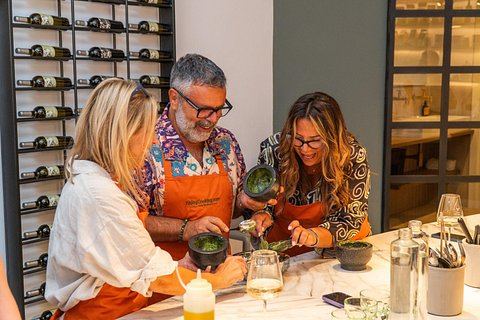 Rome Pasta, Ravioli & Tiramisu Cooking Class with Premium Wine
Free cancellation
(opens in a new tab)
-
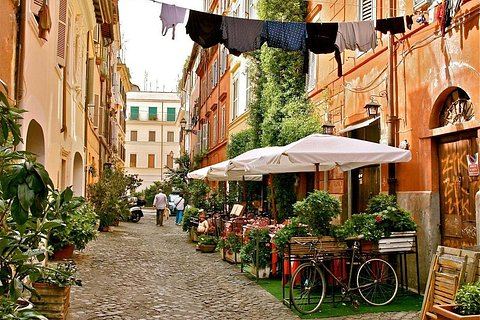 Jewish Ghetto and Trastevere: The Heart of Rome
Free cancellationPrivate
(opens in a new tab)
-
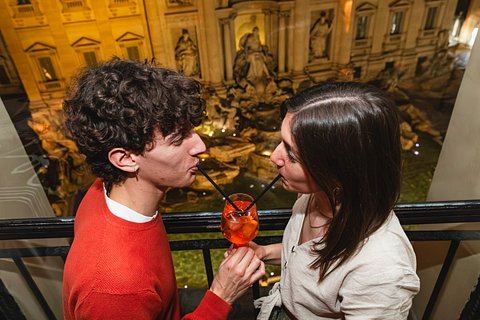 NEW Rome VIP Food Tour with Wine Pairing and Trevi Fountain View
Free cancellation
(opens in a new tab)
Affiliate link Viator · If you book through this link, we may earn a commission at no extra cost to you.