
Written by  Maria Torres · Updated 2026-11-20
- Category
- Piazzas & Fountains
Piazza del Popolo opens just inside the Porta del Popolo, the northern gate in the Aurelian Walls. Giuseppe Valadier gave the square its present neoclassical shape between 1811 and 1822, with two semicircles and a road climbing to the Pincio overlook. In the center, the Flaminio Obelisk, about 24 meters (79 ft) tall, was brought to Rome by Augustus and raised here by Domenico Fontana in 1589; four lion fountains ring its base. On the south side, the near-twin churches of Santa Maria dei Miracoli and Santa Maria in Montesanto frame the three streets of the Tridente. In the northeast corner, the church of Santa Maria del Popolo holds two Caravaggio canvases in the Cerasi Chapel and a chapel designed by Raphael for the Chigi family.
Quick facts
- Address
- Piazza del Popolo, Campo Marzio, 00187
- Metro / train
- Metro A A · Flaminio – Piazza del Popolo
- Admission
- Free
- Architect
- Giuseppe Valadier
Rome's northern entrance
Piazza del Popolo lies just inside the Porta del Popolo, the northern gate in the Aurelian Walls. In ancient times the gate was the Porta Flaminia, where the Via Flaminia began its route north, and for centuries travelers arriving from the north entered Rome here. The name looks as if it means the people's square, but it comes from the poplars, populus in Latin, after which the church of Santa Maria del Popolo was named.
Gian Lorenzo Bernini redecorated the inner face of the gate in 1655 for the arrival of Queen Christina of Sweden, who had converted to Catholicism. The square was also a place of public executions until 1826.
Valadier's oval and the Flaminio obelisk
The square's present neoclassical shape is the work of the architect Giuseppe Valadier, between 1811 and 1822. He cleared a fountain by Giacomo della Porta from 1572, opened two large semicircles on the east and west sides, and linked the square to the Pincio hill above with a carriage road and ramps. Giovanni Ceccarini's fountains of 1822–1823 stand in the two semicircles: Neptune on the west side, and on the east side Rome as a goddess with the she-wolf and the twins.
In the center stands the Flaminio Obelisk, among the oldest in Rome. Pharaoh Seti I had it quarried and inscribed, and his son Ramesses II finished it and set it up at Heliopolis. Augustus brought it to Rome after the conquest of Egypt and raised it on the spine of the Circus Maximus (Circo Massimo); Pope Sixtus V had it recovered and Domenico Fontana re-erected it here in 1589. The shaft is about 24 meters (79 ft) tall, and with its base and cross the monument reaches 36.5 meters. Valadier added the base with four stone lions spouting water into round basins. The square has been pedestrian since 1997–1998.
The twin churches and the Tridente
On the south side, three straight streets fan out into the city, the layout known as the Tridente: Via del Babuino to the left toward the Spanish Steps & Piazza di Spagna, Via del Corso in the center toward Piazza Venezia, and Via di Ripetta to the right toward the Ara Pacis (Ara Pacis Augustae). The two churches that mark the junctions, Santa Maria dei Miracoli and Santa Maria in Montesanto, look like twins but differ in plan. Carlo Rainaldi began them in the 1660s, and Bernini and Carlo Fontana completed them. Santa Maria in Montesanto, between Via del Corso and Via del Babuino, is known as the Church of the Artists.
Santa Maria del Popolo: Caravaggio and Raphael
In the northeast corner, beside the gate, stands Santa Maria del Popolo. Pope Paschal II built a chapel here in 1099 after demolishing the tomb of the Domitii family, traditionally said to be Nero's, and the church was rebuilt in Renaissance form under Sixtus IV between 1472 and 1477. Bramante designed the choir for Julius II between 1505 and 1510, and Pinturicchio frescoed its vault. Martin Luther, then an Augustinian friar, stayed at the adjoining Augustinian convent during his visit to Rome around 1510–1511.
The Cerasi Chapel holds two canvases by Caravaggio facing each other: the Conversion of Saint Paul and the Crucifixion of Saint Peter, painted around 1600–1601 for Tiberio Cerasi, treasurer of Pope Clement VIII; Annibale Carracci's Assumption hangs over the altar between them. The Chigi Chapel was designed by Raphael for the banker Agostino Chigi and completed by Bernini for Cardinal Fabio Chigi, the future Pope Alexander VII, in 1652–1656.
How to get there
Flaminio – Piazza del Popolo station on Metro A is at Piazzale Flaminio, just outside the Porta del Popolo; walk through the gate and you are in the square. The same station connects with the Roma–Viterbo railway, which starts at Piazzale Flaminio. From the Spanish Steps & Piazza di Spagna, Via del Babuino leads straight here, and Via del Corso links the square with Piazza Venezia & the Vittoriano at its other end.
Tips: the Pincio and beyond
For the classic view of the square, climb Valadier's ramps on the east side to the Pincio Terrace, which looks down over the obelisk and the twin churches; from there the paths continue into Villa Borghese and on to the Borghese Gallery (Galleria Borghese). The square is open and free at all hours, and the two Caravaggios are in a working church, so avoid visiting during services and check the church's hours locally before you go.
Frequently asked questions
Why is it called Piazza del Popolo?
The name comes from the poplars (populus in Latin) after which the church of Santa Maria del Popolo was named, not from the word for people.
How tall is the obelisk in Piazza del Popolo?
The Flaminio Obelisk is about 24 meters (79 ft) tall; with its base and cross it reaches about 36.5 meters. It was carved under Seti I and Ramesses II and re-erected here in 1589.
Where are the Caravaggios in Piazza del Popolo?
In the Cerasi Chapel of Santa Maria del Popolo, in the northeast corner of the square: the Conversion of Saint Paul and the Crucifixion of Saint Peter.
What metro stop is Piazza del Popolo?
Flaminio – Piazza del Popolo on Metro A, just outside the Porta del Popolo.
How do you get from Piazza del Popolo to the Pincio?
Take Valadier's ramps and steps on the east side of the square up to the Pincio Terrace, which continues into Villa Borghese.
Popular tours that include Piazza del Popolo
-
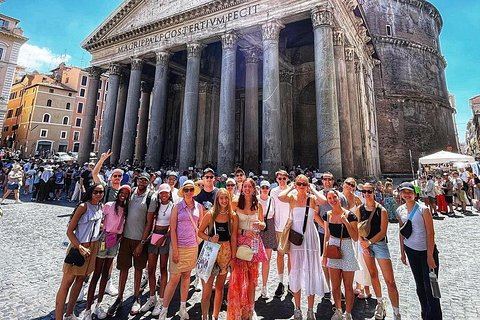 Piazza del Popolo and Historical Sights Walking Tour in Rome
Free cancellation
(opens in a new tab)
-
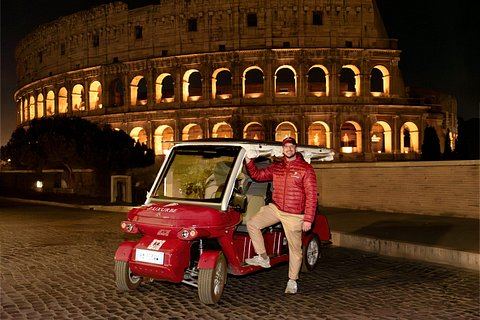 Rome by Night: Golf Cart Tour
Free cancellation
(opens in a new tab)
-
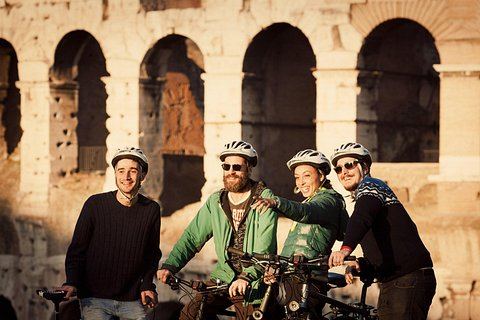 Rome City Small Group Bike Tour with quality Bike or E-Bike
Free cancellation
(opens in a new tab)
Affiliate link Viator · If you book through this link, we may earn a commission at no extra cost to you.