
Rome Travel Guide
Everything worth seeing in Rome, sorted into 10 categories
Rome packs nearly three thousand years of building into one city: the ruins of the Forum and the Colosseum, early Christian basilicas, Renaissance palaces, Baroque piazzas and fountains, and the Vatican's museums and St. Peter's, an independent state inside the city. Its historic center has been a UNESCO World Heritage Site since 1980. This guide organizes 99 attractions and places to visit into 10 categories, based on how people actually plan a trip here — by ancient site, by church or museum, by neighborhood, or by the day trips worth an early start. Pick a category below to start exploring.
Rome — AI-generated illustration
Browse by category


Ancient Rome: Photo: Livioandronico2013, Wikimedia Commons (CC BY-SA 4.0) · Vatican City & St. Peter's: Photo: Palickap, Wikimedia Commons (CC BY-SA 4.0) · Churches & Basilicas: Photo: NikonZ7II, Wikimedia Commons (CC BY-SA 4.0) · Piazzas & Fountains: Photo: NikonZ7II, Wikimedia Commons (CC BY-SA 4.0) · Museums & Galleries: Photo: Alessio Damato, Wikimedia Commons (CC BY-SA 3.0) · Catacombs & Underground Rome: Photo: Sailko, Wikimedia Commons (CC BY 3.0) · Parks, Gardens & Viewpoints: Photo: A Simple Rabbit, Wikimedia Commons (CC BY-SA 4.0) · Neighborhoods: Photo: Daderot, Wikimedia Commons (CC0) · Food & Markets: Photo: Lalupa, Wikimedia Commons (CC BY-SA 3.0) · Day Trips from Rome: Photo: Dennis G. Jarvis, Wikimedia Commons (CC BY-SA 2.0)
Affiliate link
Plan your trip
- Private transfer from the airport (Fiumicino, FCO)Kiwitaxi (opens in a new tab)Welcome Pickups (opens in a new tab)GetTransfer (opens in a new tab)
- eSIM with mobile data for ItalyAiralo (opens in a new tab)
- Car rental in RomeEconomybookings (opens in a new tab)
If you book through this link, we may earn a commission at no extra cost to you.
Top-rated tours in Rome
-
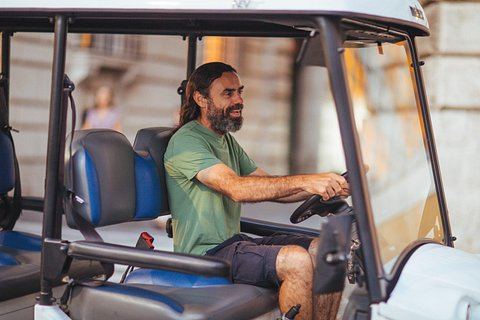 Rome on a Golf Cart Semi-Private Tour Max 6 with Private Option
Free cancellation
(opens in a new tab)
-
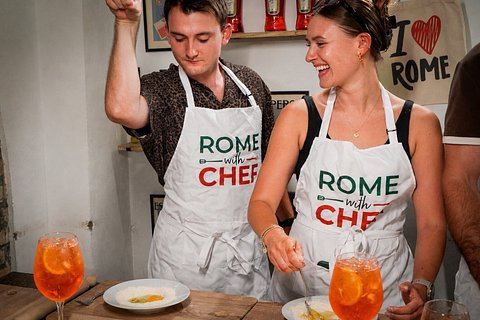 Rome Tipsy Cooking Class: Make Pasta and Mix 3 Spritz Cocktails
Free cancellation
(opens in a new tab)
-
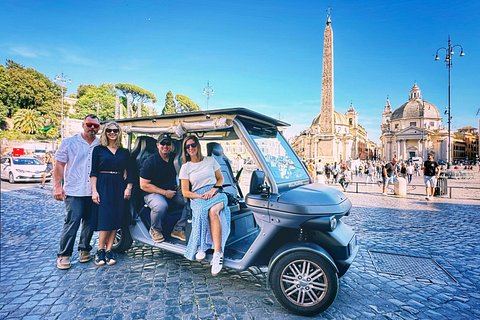 Private Rome By Golf Cart: Beyond the Landmarks
Free cancellationPrivate
(opens in a new tab)
Affiliate link Viator · If you book through this link, we may earn a commission at no extra cost to you.
About Rome
Rome is the capital of Italy and its largest city, with about 2.75 million residents in the municipality (ISTAT estimate, January 1, 2026). By tradition it was founded on April 21, 753 BC; it became the center of an empire, then the seat of the popes, and in 1871 the capital of a united Italy. Vatican City, the world's smallest state, lies entirely within it. This overview covers what is useful to know before you go: history, how the city is laid out, food, climate, transport, money and safety.
Quick facts
- Population
- About 2.75 million in the municipality of Roma Capitale (ISTAT estimate, January 1, 2026); about 4.22 million in the Metropolitan City of Rome Capital
- Area
- 1,287 km² (497 sq mi) for the municipality, divided into 15 municipi
- Founded
- April 21, 753 BC, according to tradition, by Romulus on the Palatine Hill
- Capital
- Capital of Italy since February 3, 1871, a few months after Italian troops took the city on September 20, 1870
- Residents
- Romans (romani; romano for a man, romana for a woman)
- Language
- Italian
- Currency
- Euro (€, EUR), also used in Vatican City
- Time zone
- Central European Time, UTC+1; UTC+2 in summer
- Climate
- Mediterranean (Köppen Csa): hot, dry summers and mild, wetter winters, with November the rainiest month
- Vatican City
- An independent state of 0.49 km² (0.19 sq mi) inside Rome, created by the Lateran Treaty of 1929; no passport check when you walk in from Italy
- UNESCO World Heritage
- Historic Centre of Rome, inscribed in 1980; Vatican City, inscribed separately in 1984
- Airport
- Leonardo da Vinci–Fiumicino (FCO), Italy's busiest, about 30 km (19 mi) southwest of the center
- Emergency number
- 112 for all emergency services
A short history of Rome
Roman tradition dates the founding of the city to April 21, 753 BC, when Romulus is said to have marked out its boundary on the Palatine Hill (Palatino). Archaeology confirms fortified settlements on the Palatine and Quirinal hills in the 8th century BC. Around 509 BC the Romans expelled their last king and set up a republic, which over the following centuries took control of Italy and, after the Punic Wars (264–146 BC), of the western Mediterranean.
Augustus became the first emperor in 27 BC, and under the empire the city grew very large. The Great Fire of AD 64, under Nero, destroyed much of it. Between 271 and 275 Emperor Aurelian surrounded the city with new walls about 19 km (12 mi) long, and long stretches still stand. Constantine's Edict of Milan in 313 granted toleration to Christians. The Visigoths sacked Rome in 410 and the Vandals in 455, and the Western Roman Empire ended in 476 with the deposition of Romulus Augustus. By the end of the 6th century only about 30,000 people lived inside the walls.
For more than a thousand years the city was ruled by the popes as the capital of the Papal States. Ancient buildings survived by being turned into churches: Pope Boniface IV consecrated the Pantheon to St. Mary and the Martyrs in 609. The Renaissance flourished in 15th-century Rome until the city was sacked in 1527.
On September 20, 1870, Italian troops breached the Aurelian Walls near Porta Pia and took Rome, ending the Papal States, and the city became the capital of Italy on February 3, 1871. The Lateran Treaty of February 11, 1929, settled relations between Italy and the Holy See and created Vatican City as an independent state. Rome was declared an open city during World War II, hosted the signing of the Treaty of Rome, which founded the European Economic Community, on the Capitoline Hill (Piazza del Campidoglio) in 1957, and held the Summer Olympics in 1960.
History in dates
- 753 BC By tradition, Romulus founds Rome on the Palatine Hill on April 21.
- c. 509 BC The Romans expel their last king and found the Republic.
- 27 BC Augustus becomes the first Roman emperor.
- AD 64 The Great Fire destroys much of the city under Nero.
- AD 271–275 Emperor Aurelian builds the Aurelian Walls around the city.
- AD 410 The Visigoths under Alaric sack Rome.
- AD 476 The deposition of Romulus Augustus ends the Western Roman Empire.
- AD 609 Pope Boniface IV consecrates the Pantheon as a church on May 13.
- 1527 The Sack of Rome cuts short the Roman Renaissance.
- 1870 Italian troops breach the walls at Porta Pia on September 20 and take Rome; the city becomes the capital of Italy on February 3, 1871.
- 1929 The Lateran Treaty of February 11 creates Vatican City as an independent state.
- 1957 The Treaty of Rome, founding the European Economic Community, is signed on the Capitoline Hill on March 25.
- 1980 UNESCO inscribes the Historic Centre of Rome as a World Heritage Site.
- 2025 Rome hosts a Jubilee year; Pope Leo XIV is elected on May 8, and Metro Line C reaches the Colosseum on December 16.
How the city is laid out
The municipality of Roma Capitale covers 1,287 km² (497 sq mi) and is divided into 15 municipi, but most of what visitors come for lies in Municipio I. Its historic core is divided into 22 rioni, historic districts whose name comes from the Latin regio and whose system goes back to the 14 regions of Augustus. Monti is rione number 1; Prati, created in 1921, was the last and the only one outside the 17th-century walls of Pope Urban VIII. Neighborhoods covered in this guide include Monti, Trastevere, Testaccio, the Jewish Ghetto and Prati.
The Tiber (Tevere) runs through the city in wide bends from north to south. The ancient city, the Campus Martius and most of the Centro Storico lie on its east (left) bank; Trastevere, the Janiculum Hill (Gianicolo), Prati and the Vatican lie on the west bank.
The seven hills of ancient Rome, all east of the Tiber, are the Aventine, Caelian, Capitoline, Esquiline, Palatine, Quirinal and Viminal. The Roman Forum (Foro Romano) fills the valley between the Palatine and the Capitoline, with the Colosseum (Colosseo) close by. Several better-known high points, including the Janiculum, the Pincian above Villa Borghese and the Vatican Hill, are not among the seven because they lay outside the oldest city.
Vatican City is a separate sovereign state of 0.49 km² (0.19 sq mi), the smallest in the world by area and population, entirely surrounded by Rome. There are no passport controls when you walk in from Italy, and it uses the euro. St. Peter's Square (Piazza San Pietro), St. Peter's Basilica (Basilica di San Pietro) and the Vatican Museums (Musei Vaticani) are inside it.
Food: pasta, offal and the trattoria
Four pasta dishes define Roman cooking, and three of them are built on guanciale (cured pork cheek), pecorino romano (a hard ewe's-milk cheese) and black pepper. Gricia is the basic version; add egg and you have carbonara; add tomato and you have amatriciana, a sauce that originated in Amatrice, northeast of Rome. Cacio e pepe drops the pork and keeps only pecorino and pepper.
The cucina romana also relies on the quinto quarto, the "fifth quarter": offal and other cuts that were left over after butchering and went to the poor. Testaccio, the former slaughterhouse district, is where these dishes are most at home: coda alla vaccinara (oxtail stewed with celery, named for the vaccinari, the butchers) and trippa alla romana (tripe in tomato sauce). Other classics are saltimbocca alla romana (veal with prosciutto and sage), carciofi alla romana (braised artichokes, a spring dish) and carciofi alla giudia, whole deep-fried artichokes from the cooking of Rome's Jewish community.
Street food means supplì, fried rice balls with tomato sauce, and pizza al taglio, sold by the slice and by weight. For breakfast or dessert, a maritozzo is a soft sweet bun split open and filled with whipped cream.
The trattoria is the traditional neighborhood restaurant, informal and family-run, and many still keep a weekly rhythm: gnocchi on Thursday, baccalà (salt cod) on Friday and tripe on Saturday. Markets such as the Testaccio Market (Mercato di Testaccio) and Campo de' Fiori Market show what is in season.
Climate and the best time to visit
Rome has a Mediterranean climate (Köppen Csa). Summers are hot and dry: July and August average highs of about 31°C (88°F) and lows near 19–20°C (66–68°F), and July is the driest month, with about 20 mm (0.8 in) of rain. In the city itself there are about 63 days a year above 30°C (86°F).
Winters are mild and wetter. January averages a high of 12°C (54°F) and a low of about 3°C (38°F), and frosts occur. Annual rainfall is about 750–800 mm (30–31 in), falling on around 79 days, and November and December are the rainiest months, with about 100 mm (4 in) each.
Spring and fall are the most comfortable seasons for walking: April averages highs of about 19°C (66°F) and October about 22°C (72°F). In summer, plan outdoor sites such as the Colosseum (Colosseo), the Roman Forum (Foro Romano) and the Baths of Caracalla (Terme di Caracalla) for early morning, and carry water.
Getting around Rome
The Metro has three lines, all run by ATAC. Line A (orange) runs from Battistini to Anagnina via Ottaviano, near the Vatican, and Termini. Line B (blue), opened in 1955, runs from Laurentina to Rebibbia, with the B1 branch to Jonio, and stops at Termini and Colosseo. Lines A and B cross at Termini, Italy's busiest railway station.
Line C (green) is driverless and runs from Monte Compatri-Pantano in the southeast to Colosseo/Fori Imperiali, where it meets Line B; that station and Porta Metronia opened on December 16, 2025, and display finds from the excavations. Line C also meets Line A at San Giovanni. The section through the historic center is still under construction.
ATAC also runs the city's buses and six tram lines. One BIT ticket is valid for 100 minutes from validation on the metro, buses and trams; 24-, 48- and 72-hour and 7-day tickets are also sold. You can pay by tapping a contactless bank card on bus readers and metro turnstiles, or buy digital tickets in authorized apps. Children up to age 10 ride free with a paying adult.
The center is compact, and walking is often the fastest way between the Pantheon, Piazza Navona, the Trevi Fountain (Fontana di Trevi) and the Spanish Steps & Piazza di Spagna, a part of the city with few metro stations. From Fiumicino airport, the Leonardo Express train runs nonstop to Roma Termini in about 32 minutes, usually every 15 minutes. Use only licensed taxis, which have a roof sign and the company name and number on the side, or order one by app or phone.
Money, tipping and paying
Italy uses the euro, and so does Vatican City, which mints its own euro coins. Contactless card payment works on public transport, but carry some cash for small purchases and tips.
In much of Italy restaurants add a coperto, a fixed per-person cover charge. In Lazio, the region around Rome, a 2006 regional law forbids charging extra for the coperto, and restaurants must show the price list before you order. Charges for bread (pane) or service (servizio) are allowed if they are listed on the menu; if you don't want the bread, you can send it back.
Tipping is optional and up to you. If no service charge is listed, leaving a euro or two per person for good service is common. Many places cannot add a tip to a card payment, so tip in cash. In many casual places you pay at the cash desk (cassa) rather than at the table.
Rome charges a tourist tax (contributo di soggiorno) per person per night on non-residents staying in hotels, B&Bs, vacation rentals and other accommodations. The rate depends on the type and category of the property and was last raised on October 1, 2023; it applies to the first 10 consecutive nights, and children under 10 are exempt. It is collected by the accommodation or booking platform.
Safety basics
Pickpocketing and bag snatching are the main risks, especially at major sights, in crowds, on public transport and in the main train and metro stations. Keep bags closed and in front of you, don't carry all your cards and cash together, and leave spares in the hotel safe. Be wary of strangers who approach to ask for help or directions, a common distraction technique.
Don't accept drinks from strangers or leave yours unattended. Never leave luggage in a parked car, even in the trunk. Transport strikes are often called at short notice, so check before travel days.
Wading or bathing in public fountains is an offense in Rome, and some Italian cities ban sitting on monument steps. Carry photo ID, since police can ask for it at any time. In an emergency, call 112.
Useful Italian words
Greet with "buongiorno" (good morning/good day) or "buonasera" (good evening) when you walk into a shop or restaurant. "Per favore" is please, "grazie" thank you, "scusi" excuse me, and "il conto, per favore" asks for the check. "Paghiamo qui o alla cassa?" asks whether you pay at the table or at the register.
Words you will see on menus and signs: "pane" (bread), "servizio" (service charge), "coperto" (cover charge), "acqua naturale" or "frizzante" (still or sparkling water), "biglietto" (ticket), "uscita" (exit), "chiuso" (closed), "sciopero" (strike), "piazza" (square), "rione" (historic district of Rome) and "fontanella" (drinking fountain).
Did you know?
- The Pantheon's dome, 43 m (142 ft) across, is still the largest unreinforced concrete dome in the world, nearly 1,900 years after it was built.
- Vatican City, at 0.49 km² (0.19 sq mi), is the world's smallest country both by area and by population.
- The word rione comes from the Latin regio, and Rome's 22 rioni descend from the 14 regions into which Augustus divided the city.
- Roma Termini is named after the ancient Baths of Diocletian (Terme di Diocleziano), across the street from its main entrance; with 32 platforms it is one of the largest stations in Europe.
- Gricia, carbonara and amatriciana are close relatives: carbonara is gricia with egg, and amatriciana is gricia with tomato.
- The new Colosseo/Fori Imperiali metro station took about 12 years to build and doubles as a small museum of finds from the excavations.
- After the fall of the empire, Rome's population fell to roughly 30,000 by the end of the 6th century; today the municipality has about 2.75 million residents.
Frequently asked questions
How many days do I need in Rome?
The ancient sites alone, from the Colosseum (Colosseo) and Roman Forum (Foro Romano) to the Pantheon, take at least two full days, and the Vatican Museums (Musei Vaticani) and St. Peter's Basilica (Basilica di San Pietro) need most of another. Three to four days lets you add a neighborhood such as Trastevere or Monti.
When is the best time to visit Rome?
Spring and fall are the most comfortable, with average highs of about 19°C (66°F) in April and 22°C (72°F) in October. July and August average highs of about 31°C (88°F), and November and December are the rainiest months.
Do I need a passport to visit Vatican City?
No. Vatican City is an independent state, but there are no passport controls when you walk in from Rome, and it uses the euro.
How do I get from Fiumicino airport to the center?
The Leonardo Express train runs nonstop from the airport to Roma Termini in about 32 minutes, usually every 15 minutes. Termini is the hub of Metro lines A and B. Licensed taxis are the alternative.
Should I tip in Rome?
Tipping is optional. If no service charge is listed on the menu, a euro or two per person for good service is common, left in cash. A separate coperto (cover charge) is not allowed in Lazio, but listed charges for bread or service are.
Can I pay for buses and the metro with a credit card?
Yes. Tap a contactless bank card on the reader on buses and trams or at the metro turnstiles; the fare is applied directly. A standard BIT ticket is valid for 100 minutes.
Is Rome safe for tourists?
Rome is generally safe, but pickpocketing is common at major sights, in crowds, on public transport and in the main stations. Keep bags closed and in front of you, and call 112 in an emergency.
Sources
- Rome – Wikipedia (EN)
- Roma – Wikipedia (IT)
- Climate of Rome – Wikipedia
- History of Rome – Wikipedia
- Seven hills of Rome – Wikipedia
- Rioni of Rome – Wikipedia
- Rione – Vocabolario Treccani
- Centro storico di Roma – Wikipedia (IT)
- Aurelian Walls – Wikipedia
- Capture of Rome – Wikipedia
- Vatican City – Wikipedia
- Pantheon, Rome – Wikipedia
- Treaty of Rome – Wikipedia
- 2025 Jubilee – Wikipedia
- Roman cuisine – Wikipedia
- Rome Metro – Wikipedia
- Il Post – Metro C: aperte le fermate Colosseo/Fori Imperiali e Porta Metronia (Dec 16, 2025)
- ATAC – Tickets and passes
- Trams in Rome – Wikipedia
- Roma Termini railway station – Wikipedia
- Leonardo Express – Wikipedia
- Leonardo da Vinci–Fiumicino Airport – Wikipedia
- Studio Cataldi – Coperto al ristorante: è legittimo?
- The Local Italy – The etiquette around paying your restaurant bill in Italy (June 12, 2024)
- Turismo Roma (Roma Capitale) – Contributo di soggiorno: le nuove tariffe
- Roma Capitale – Contributo di soggiorno
- Finestre sull'Arte – Vacanze a Roma? Aumenti da capogiro per la tassa di soggiorno
- GOV.UK – Italy safety and security
About this guide
Rome Unlocked is an independent, continuously updated guide covering the city's ancient sites, the Vatican, churches, piazzas and fountains, museums, catacombs, parks and viewpoints, neighborhoods, markets and day trips. Every listing includes practical location context so you can group nearby attractions into one day instead of crossing the city back and forth.