
Written by  Maria Torres · Updated 2026-11-20
- Category
- Neighborhoods
- Area
- Centro Storico
In July 1555 Pope Paul IV's bull Cum nimis absurdum confined Rome's Jews to an enclosed area of the Sant'Angelo rione beside the Theater of Marcellus, where they lived under heavy restrictions until the ghetto was abolished after 1870. Most of its crowded streets were razed from 1888, creating today's Via del Portico d'Ottavia, Via Catalana and Via del Tempio, and the Great Synagogue by Vincenzo Costa and Osvaldo Armanni was inaugurated on 29 July 1904, with the Jewish Museum of Rome in its basement. On 16 October 1943 the SS raided the quarter and deported 1,023 people to Auschwitz; fewer than twenty survived. The neighborhood remains the center of Roman Jewish life: walk Via del Portico d'Ottavia and try carciofi alla giudia, the fried artichokes of Roman-Jewish cooking.
Quick facts
- Address
- Via del Portico d'Ottavia, Sant'Angelo (Rione XI), Municipio I, 00186
Where the ghetto was and what remains
The Jewish Ghetto lies in the Sant'Angelo rione, on the left bank of the Tiber between the Theatre of Marcellus (Teatro di Marcello) and the river opposite Tiber Island. Its main street is Via del Portico d'Ottavia, which runs from the ruins of the Portico of Octavia toward Piazza delle Cinque Scole, named after the five synagogues that once shared one building. The Great Synagogue and the Jewish Museum of Rome stand on the riverside, between Via Catalana and Lungotevere de' Cenci.
The Jewish Museum traces the community's presence in Rome back to the 2nd century BC; before the ghetto, many Jews lived across the river in Trastevere.
The ghetto, 1555 to 1870
In July 1555 Pope Paul IV's bull Cum nimis absurdum ordered Rome's roughly 2,000 Jews to live within a walled enclosure, the "serraglio degli ebrei," in a low-lying, flood-prone corner of Sant'Angelo where most residents were already Jewish. The wall, designed by Giovanni Sallustio Peruzzi, was paid for by the community itself. Jews had to wear a distinctive cap, could not own property and were largely confined to the trade in secondhand goods and cloth.
The number of gates grew over time from two to eight, and Sixtus V enlarged the area; by the late 1580s about 3,500 people lived inside. Overcrowding brought disease: the plague of 1656 killed 800 of some 4,000 inhabitants. From 1572, under Gregory XIII, Jews were made to attend weekly sermons aimed at their conversion, a practice ended only in 1848 under Pius IX.
The French occupation briefly freed the community in 1798, but confinement returned. The walls came down in 1848, and the ghetto was finally abolished when Rome became part of the Kingdom of Italy in 1870. From 1888 most of its cramped streets were demolished and the riverside rebuilt with new apartment blocks, which is why the area today looks largely late-19th-century. Its people developed their own dialect, Judeo-Roman, or giudeo-romanesco.
The Great Synagogue and the Jewish Museum
The Great Synagogue (Tempio Maggiore), designed by Vincenzo Costa and Osvaldo Armanni, was built between 1901 and 1904 and inaugurated on July 29, 1904. Its square aluminum dome is the only square dome in Rome and stands out on the skyline from the Tiber bridges. The complex also houses the Spanish Synagogue (Tempio Spagnolo), which replaced the five synagogues of the ghetto.
The Jewish Museum of Rome, entered from Via Catalana, occupies about 700 square meters in the synagogue complex. It shows liturgical silver, manuscripts, textiles and marble works, most of them from the ghetto period and from the old Cinque Scole building. Visits include a guided tour of the Great Synagogue and the Spanish Synagogue, and the museum also offers an augmented and virtual reality tour of the 1555 ghetto lasting about 30 minutes plus an educator's introduction. Opening days follow the Jewish calendar, so check the official site before you go.
On October 9, 1982, during the Sukkot service, armed men attacked worshippers outside the synagogue and killed two-year-old Stefano Gaj Taché. On April 13, 1986 Pope John Paul II came here to pray with Chief Rabbi Elio Toaff, the first known papal visit to a synagogue since the early Church; Benedict XVI followed in 2010 and Francis on January 17, 2016.
October 16, 1943
On the morning of October 16, 1943 German SS units raided the quarter and rounded up more than 1,000 of Rome's Jews. The 1,023 people deported were sent to Auschwitz; only around 16 came back. The story is told in the museum's rooms on persecution before and during the Second World War.
The Portico of Octavia and the old fish market
At the western end of the street stand the remains of the Portico of Octavia. Quintus Caecilius Metellus Macedonicus first built a colonnade here in 146 BC around two temples; Augustus rebuilt it after 27 BC and dedicated it to his sister Octavia. After a fire it was restored in 203 by Septimius Severus and Caracalla. When an earthquake in 442 brought down two columns, they were replaced with the brick arch that still stands.
The church of Sant'Angelo in Pescheria was built into the ruins in the early Middle Ages, and its name recalls the fish market that operated in and around the portico until the end of the 19th century. That trade shaped Roman-Jewish cooking: fish broth and carciofi alla giudia, whole artichokes fried until they open like a flower, are its best-known dishes, and the restaurants along Via del Portico d'Ottavia serve them.
How to get there
There is no metro station in or near the ghetto. Tram 8 runs along Via Arenula, at the western edge of the area, between Piazza Venezia and Trastevere; during 2026 it was replaced by buses on several occasions, so check ATAC notices. From Piazza Venezia & the Vittoriano the walk past the Theatre of Marcellus takes you straight into Via del Portico d'Ottavia; from Trastevere cross Ponte Garibaldi or walk over Tiber Island.
Tips for your visit
Combine the ghetto with nearby guide places: the Turtle Fountain (Fontana delle Tartarughe) in Piazza Mattei is a block north of Via del Portico d'Ottavia, and Largo di Torre Argentina and Campo de' Fiori are within an easy walk. The synagogue interiors can be visited only through the museum's guided tours, so plan the museum first and walk the streets afterward.
Key places in the Jewish Ghetto
What to look for along Via del Portico d'Ottavia and the riverfront.
Portico of Octavia
Where West end of Via del Portico d'Ottavia
Roman portico rebuilt by Augustus and restored in 203
Sant'Angelo in Pescheria
Where Inside the Portico of Octavia
Church named after the old fish market
Great Synagogue and Jewish Museum
Where Via Catalana / Lungotevere de' Cenci
1904 synagogue with square dome; museum and guided synagogue tours
Piazza delle Cinque Scole
Where East end of the old ghetto
Square named after the five ghetto synagogues
Turtle Fountain
Where Piazza Mattei
Fountain in Piazza Mattei, just north of Via del Portico d'Ottavia
Theatre of Marcellus
Where Via del Teatro di Marcello
Roman theater at the edge of the area
Restaurant opening times and prices are not listed here.
Frequently asked questions
Where is the Jewish Ghetto in Rome?
In the Sant'Angelo rione on the left bank of the Tiber, between the Theatre of Marcellus and the river opposite Tiber Island. Its main street is Via del Portico d'Ottavia.
Can you visit the Great Synagogue of Rome?
Yes, through the Jewish Museum of Rome on Via Catalana: the visit includes a guided tour of the Great Synagogue and the Spanish Synagogue. Check opening days on the museum's official site.
When was the Rome ghetto established and abolished?
Pope Paul IV created it with the bull Cum nimis absurdum in July 1555; it was abolished after Rome joined the Kingdom of Italy in 1870, and most of it was demolished from 1888.
What happened in the Rome ghetto on October 16, 1943?
German SS units rounded up Rome's Jews; 1,023 people were deported to Auschwitz and only around 16 survived.
What food is the Jewish Ghetto known for?
Roman-Jewish dishes such as carciofi alla giudia, whole fried artichokes, and fish dishes tied to the fish market once held at the Portico of Octavia.
How do you get to the Jewish Ghetto?
On foot from Piazza Venezia or Trastevere, or by tram 8 along Via Arenula. There is no metro station nearby.
Popular tours that include Jewish Ghetto
-
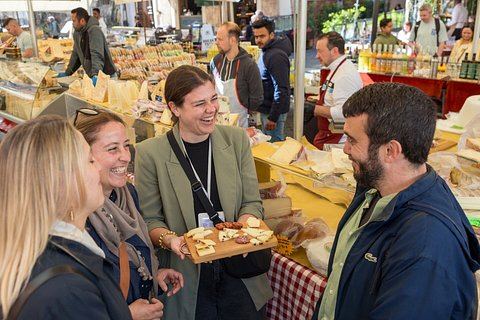 Locals' Rome Food Tour:Campo de Fiori, Jewish Ghetto & Trastevere
Free cancellation
(opens in a new tab)
-
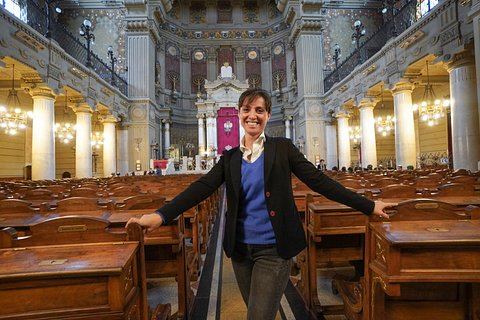 Jewish Ghetto and Synagogues with Jewish Roman Guide 3 Hours
Free cancellation
(opens in a new tab)
-
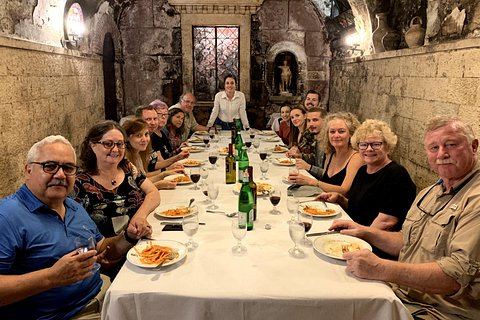 Jewish Ghetto & Piazza Navona: Food, Wine & Sightseeing Rome Tour
Free cancellation
(opens in a new tab)
Affiliate link Viator · If you book through this link, we may earn a commission at no extra cost to you.