
Written by  Maria Torres · Updated 2026-11-20
- Category
- Piazzas & Fountains
- Area
- Centro Storico
The Spanish Steps climb 135 steps up a 29-meter (95 ft) slope from Piazza di Spagna to the French church of Trinità dei Monti; the square below is named for the Palazzo di Spagna, seat of Spain's embassy to the Holy See. Francesco de Sanctis won the design competition of 1717, and the Bourbon fleur-de-lys and Pope Innocent XIII's eagle are worked into the stone details. At the foot sits the Barcaccia, a boat-shaped fountain of 1627–1629 credited to Pietro Bernini. To the right of the steps is the house where John Keats died in 1821, now a museum. Since 2019, sitting on the steps can earn a fine, and pots of azaleas cover part of the stairway each spring around Rome's birthday on April 21.
Quick facts
- Address
- Piazza di Spagna, Campo Marzio, 00187
- Metro / train
- Metro A A · Spagna
- Admission
- Free
- Completed
- 1725
- Architect
- Francesco de Sanctis
Sources · facts checked on 2026-11-16
- Spanish Steps – Wikipedia (en)
- Scalinata di Trinità dei Monti – Wikipedia (it)
- Fontana della Barcaccia – Wikipedia (it)
- Column of the Immaculate Conception – Wikipedia (en)
- Trinità dei Monti – Wikipedia (en)
- Keats–Shelley Memorial House – Wikipedia (en)
- Sky TG24 – Piazza di Spagna, vietato sedersi sulla scalinata (Aug 2019)
- Spagna (Rome Metro) – Wikipedia (en)
A staircase between two countries' churches
The Spanish Steps, called in Italian the Scalinata di Trinità dei Monti, climb 135 steps and 29 meters (95 ft) from Piazza di Spagna to Piazza Trinità dei Monti and the twin-towered church of Trinità dei Monti at the top. The church was under the patronage of the kings of France, and today it is one of Rome's French-speaking Catholic churches, run by the Emmanuel Community. The square at the bottom takes its name from the Palazzo di Spagna, which houses Spain's embassy to the Holy See, so the name refers to the square below rather than to the people who paid for the stairs.
In front of the church at the top stands the Sallustiano obelisk, put up under Pope Pius VI at the end of the 18th century. The view from the top terrace runs straight down Via dei Condotti, the street of luxury fashion houses, toward Via del Corso.
Who built the Spanish Steps
The idea of linking the church to the square below with a monumental stair was a French one. The French diplomat Étienne Gueffier, who died in 1660, left money in his will for the project, though a nephew contested it and claimed half, and Cardinal Mazarin also took up the plan before his death in 1661. Decades of argument followed over whether the design should glorify France or the papacy.
Francesco de Sanctis won the competition of 1717; for a long time the design was attributed to Alessandro Specchi, who also drew up a proposal. The steps were built between 1723 and 1725, and Pope Benedict XIII inaugurated them for the Jubilee of 1725. The compromise shows in the stone: the French fleur-de-lys and the eagle of Pope Innocent XIII appear in the decoration. The stairs divide and rejoin in a series of ramps and terraces, which is why the climb feels gentler than the height suggests.
The jewelry house Bulgari paid €1.5 million for the latest restoration, which began on October 8, 2015 and reopened the steps on September 21, 2016.
The Barcaccia and the rest of the square
At the foot of the steps is the Fontana della Barcaccia, a half-sunken stone boat commissioned by Pope Urban VIII in 1626 and finished in 1629. It is credited to Pietro Bernini, and his son Gian Lorenzo probably completed it after his father's death. The Acqua Vergine, which also feeds the Trevi Fountain (Fontana di Trevi), arrives here with too little pressure for tall jets, so Bernini set the boat in an oval basin slightly below street level, with a small fountain in the middle. The bees of Urban VIII's Barberini family and suns with human faces decorate the ends. A popular story links the boat to a vessel stranded in the square by the Tiber flood of 1598.
On February 19, 2015, fans of the Dutch club Feyenoord, in Rome for a Europa League match, damaged the fountain; a 10 cm piece of travertine broke off and bottles left permanent scratches and chips. The most recent restoration was completed on April 16, 2025.
In Piazza Mignanelli, the southern arm of the square in front of the Spanish embassy, rises the Column of the Immaculate Conception, inaugurated by Pope Pius IX in 1857. Every December 8, the feast of the Immaculate Conception, Rome's firefighters place flowers on the statue at the top, and since 1953 the pope has come to pay homage at the column.
Keats, Babington's and the Tridente
The building to the right of the steps as you face them is where the English poet John Keats died in 1821. Its second floor is now the Keats-Shelley House, a small museum with letters, manuscripts and paintings relating to Keats, Percy Bysshe Shelley, Byron and other English-language writers who lived in Rome. Babington's, an English tea room, is also on the square, as is the Giorgio De Chirico House, where the painter lived.
Piazza di Spagna is the eastern point of the Tridente, the triangle of streets that runs north to Piazza del Popolo. Via del Babuino leads there directly, while Via dei Condotti, Via Frattina and Via Borgognona run west toward Via del Corso.
Rules: no sitting on the steps
Rome's urban police regulation of 2019 treats the Spanish Steps as a monument where you may pass but not sit or lie down. Enforcement began in summer 2019 with municipal police officers on the steps; the fine reported at the time was €250, rising to €400 for dirtying or damaging the stairs.
Each spring, pots of azaleas cover part of the stairway around Rome's birthday on April 21 and stay until early May.
How to get there and tips
Spagna station on Metro A is right beside the square: its main exit is on Vicolo del Bottino, a few steps from Piazza di Spagna. A second exit, reached by moving walkways, comes out near Porta Pinciana and the edge of Villa Borghese, which is useful if you want to walk down through the park instead.
From the top of the steps, Viale della Trinità dei Monti leads north to the Pincio Terrace and its view over Piazza del Popolo. Early morning is the only time the steps are close to empty. The Trevi Fountain (Fontana di Trevi) is a short walk south, and the Ara Pacis (Ara Pacis Augustae) lies west toward the Tiber.
Around Piazza di Spagna
The landmarks on and around the square, from the top of the steps to the bottom.
Trinità dei Monti
Where Top of the steps
French-patronage church with twin bell towers, entrusted to the Emmanuel Community
Sallustiano obelisk
Where In front of Trinità dei Monti
Roman obelisk set up under Pope Pius VI in the late 18th century
Fontana della Barcaccia
Where Foot of the steps
Half-sunken boat fountain of 1626–1629 credited to Pietro Bernini
Keats-Shelley House
Where Right of the steps, facing them
Museum in the house where John Keats died in 1821
Babington's
Where Piazza di Spagna
English tea room
Column of the Immaculate Conception
Where Piazza Mignanelli
Marian column of 1857, decorated with flowers every December 8
Palazzo di Spagna
Where South side of the square
Spain's embassy to the Holy See, which gave the square its name
Check the Keats-Shelley House's own site for opening hours and tickets.
Frequently asked questions
How many steps are the Spanish Steps?
There are 135 steps, rising 29 meters (95 ft) from Piazza di Spagna to the church of Trinità dei Monti.
Can you sit on the Spanish Steps?
No. Since 2019 Rome's urban police regulation bans sitting or lying on the steps, and offenders can be fined; the fine reported when the ban began was €250.
Why are they called the Spanish Steps?
They take their name from Piazza di Spagna at their foot, named after the Palazzo di Spagna, seat of Spain's embassy to the Holy See. The stairs themselves were financed with French money.
What metro stop is the Spanish Steps?
Spagna on Metro A; the main exit on Vicolo del Bottino is next to the square.
When are the azaleas on the Spanish Steps?
The pots are set out in spring around Rome's birthday on April 21 and usually stay until early May.
Who designed the Spanish Steps?
Francesco de Sanctis, who won the competition of 1717; the steps were built from 1723 to 1725.
Popular tours that include Spanish Steps & Piazza di Spagna
-
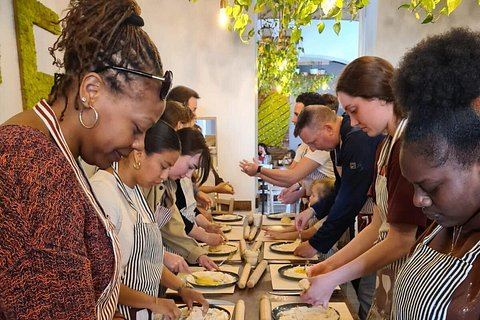 Cooking Class 2 Hour Spanish Steps - Fettucine and Tiramisù
Free cancellation
(opens in a new tab)
-
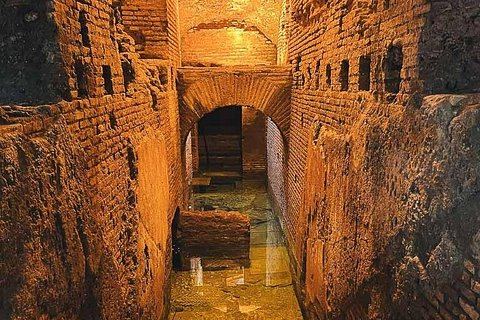 Trevi Fountain Underground Aqueduct and Spanish Steps Tour
Free cancellation
(opens in a new tab)
-
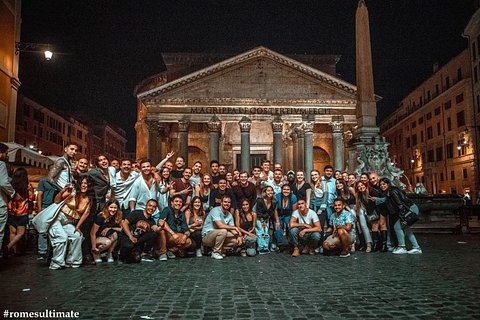 Rome's Ultimate Party aka the Spanish Steps Pub Crawl
Free cancellation
(opens in a new tab)
Affiliate link Viator · If you book through this link, we may earn a commission at no extra cost to you.