
Written by  Maria Torres · Updated 2026-11-20
- Category
- Piazzas & Fountains
- Area
- Centro Storico
Campo de' Fiori, the field of flowers, takes its name from the meadow that covered the area in the Middle Ages, and unlike Rome's grander squares it was never formally designed. The surrounding streets are named for old trades: Via dei Cappellari for hat-makers, Via dei Chiavari for key-makers, Via dei Giubbonari for tailors. Public executions were held here, and on February 17, 1600, the philosopher Giordano Bruno was burned alive for heresy; Ettore Ferrari's monument to him, dedicated in 1889, stands on the spot, facing toward the Vatican. A produce and fish market moved here from Piazza Navona in 1869. Palazzo Farnese is one block southwest, so the two squares make an easy pair.
Quick facts
- Address
- Piazza Campo de' Fiori, Parione / Regola, 00186
- Admission
- Free
Sources · facts checked on 2026-11-16
A square that grew instead of being designed
Campo de' Fiori is a rectangular square south of Piazza Navona, on the border between the rioni Parione and Regola. Its name means field of flowers, from the meadow that covered the area in the Middle Ages. In ancient times this was open ground between the Theatre of Pompey and the flood-prone banks of the Tiber, and it stayed largely undeveloped until the 15th century; unlike Piazza Navona or the Capitoline, no architect ever planned it.
In 1456, under Pope Callixtus III, Cardinal Ludovico Trevisani had the area paved as part of an improvement of the Parione district, and inns, shops and a horse market held on Mondays and Saturdays followed. One of the inns, the Taverna della Vacca, belonged to Vannozza dei Cattanei, a lover of Pope Alexander VI Borgia. A block of houses was demolished in 1858 to enlarge the square.
Executions and Giordano Bruno
For centuries Campo de' Fiori was a place of public punishment. On September 9, 1553, the Holy Office burned copies of the Talmud here, an event recalled by a plaque installed in 2011. On February 17, 1600, the Dominican friar and philosopher Giordano Bruno was burned alive after the Roman Inquisition condemned him for heresy. Marco Antonio de Dominis was burned here in 1624, and poisoners convicted in the Spana trial were executed here in 1659–1660.
In 1889, in the decades after Rome became the capital of united Italy, a monument to Bruno by the sculptor Ettore Ferrari was dedicated on the spot of the execution. The hooded bronze figure faces toward the Vatican, and the inscription on the base begins QUI DOVE IL ROGO ARSE, here where the pyre burned.
The market and the Terrina fountain
A produce and fish market has filled the square since 1869, when it moved here from Piazza Navona. Stalls set up in the morning, and in the afternoon the square turns into an open space for the cafés and restaurants around it; the guide's separate page on the Campo de' Fiori Market covers what is sold there.
At the end of the square stands the Fontana della Terrina, a fountain shaped like a soup tureen with a lid. The original was moved in 1889, when the Bruno monument was set up, and the square received a copy, used by the flower sellers to keep cut flowers fresh. Its lid bears the Roman dialect motto FA DEL BENE E LASSA DIRE: do good and let them talk.
Streets named for trades
The lanes around the square keep the names of the craftsmen who once worked in them: Via dei Cappellari for hat-makers, Via dei Chiavari for key-makers, Via dei Balestrari for crossbow-makers and Via dei Giubbonari for tailors of the giubbone, a type of jacket. Farther east, past Via Arenula, lie the Jewish Ghetto and the Turtle Fountain (Fontana delle Tartarughe).
One block southwest is Piazza Farnese and Palazzo Farnese, begun by Antonio da Sangallo the Younger and continued by Michelangelo, which has been the French Embassy since the 20th century. The two granite basins of its fountains came from the Baths of Caracalla (Terme di Caracalla) in the 16th century. The Renaissance Palazzo della Cancelleria stands just to the northwest.
Visiting by day and at night
The square is free and open at all times. The morning shows it as a working market; in the evening it becomes one of the centro storico's main meeting places for young Romans and visitors, and since the 2000s it has had episodes of late-night trouble involving drunk tourists and football supporters, so later at night is the time to keep your wits about you.
There is no metro station nearby. ATAC buses along Corso Vittorio Emanuele II, including the 64 between Termini and Stazione San Pietro, stop within a short walk; Largo di Torre Argentina, with its own bus and tram stops, is a few minutes east. Piazza Navona is directly north across the Corso.
Frequently asked questions
Why is it called Campo de' Fiori?
The name means field of flowers, from the meadow that covered the area in the Middle Ages before it was paved in 1456.
Who is the statue in Campo de' Fiori?
Giordano Bruno, the philosopher burned for heresy on this spot on February 17, 1600; Ettore Ferrari's monument was dedicated in 1889.
When is the market at Campo de' Fiori?
The produce and fish market, held here since 1869, runs in the morning; stalls clear in the afternoon. Check locally for days and times.
Is Campo de' Fiori safe at night?
It is a busy evening meeting place; there have been episodes of late-night trouble linked to drunk visitors and football fans, so keep an eye on your belongings and avoid crowds of fans on match nights.
How do you get to Campo de' Fiori?
There is no metro stop; take an ATAC bus along Corso Vittorio Emanuele II, such as the 64 from Termini, or walk from Piazza Navona or Largo di Torre Argentina.
Popular tours that include Campo de' Fiori
-
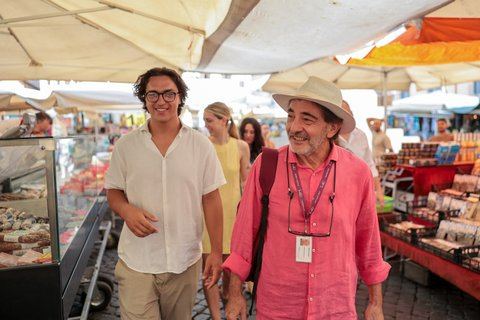 Rome Trastevere Campo de' Fiori Street Food Tour Eat Like a Local
Free cancellation
(opens in a new tab)
-
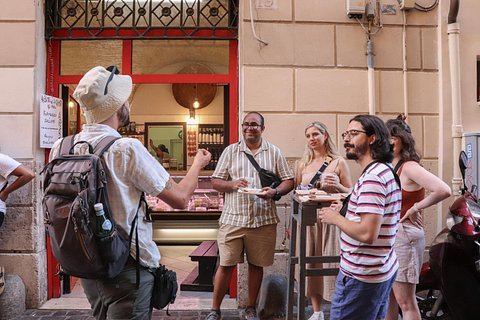 Rome Food Tour: Pasta, Wine, Gelato Trastevere Campo de' Fiori
Free cancellation
(opens in a new tab)
-
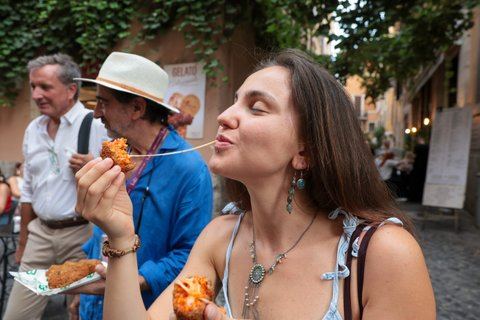 Rome Ultimate Food Tour Trastevere Tiber Island & Campo de' Fiori
Free cancellation
(opens in a new tab)
Affiliate link Viator · If you book through this link, we may earn a commission at no extra cost to you.