
Written by  Maria Torres · Updated 2026-11-20
- Category
- Churches & Basilicas
- Area
- Centro Storico
San Luigi dei Francesi is the national church of France in Rome, a short walk from Piazza Navona. It was designed by Giacomo della Porta and completed by Domenico Fontana in 1589, and its façade carries statues of Charlemagne and St. Louis. Most visitors come for the Contarelli Chapel, which holds Caravaggio's three canvases on the life of St. Matthew: The Calling on the left wall, The Inspiration above the altar and The Martyrdom on the right. In another chapel, Domenichino's frescoes tell the story of St. Cecilia. The chapel is small and gets crowded, so visit early, and combine it with Sant'Ignazio and Santa Maria sopra Minerva nearby.
Quick facts
- Address
- Piazza di San Luigi de' Francesi 5, Sant'Eustachio, 00186
- Opening hours
- Mon–Fri: 09:30–12:45; Mon–Fri: 14:30–18:30
- Admission
- Free
- Completed
- 1589
- Architect
- Giacomo della Porta; Domenico Fontana
Sources · facts checked on 2026-11-16
France's national church, between Piazza Navona and the Pantheon
San Luigi dei Francesi, the Church of St. Louis of the French, is the national church of France in Rome and is dedicated to King Louis IX, canonized as St. Louis. It stands on the small Piazza di San Luigi de' Francesi in the Sant'Eustachio district, a few steps from Piazza Navona and the Pantheon.
Most visitors come for one chapel: the Contarelli Chapel, with three canvases by Caravaggio that made his name in Rome. But the rest of the church, a showcase of French patronage from the 16th to the 19th century, rewards a slower look.
Caravaggio's three paintings of St. Matthew
The Contarelli Chapel is the last chapel on the left aisle, beside the main altar. It is named after the French cardinal Mathieu Cointrel (Contarelli in Italian), who died in 1585 and left funds for its decoration. Giuseppe Cesari, known as the Cavalier d'Arpino, painted the vault frescoes, finished by 1593. Caravaggio signed the contract for the two side paintings on July 23, 1599, and both were in place by July 1600.
On the left wall, The Calling of St. Matthew shows the tax collector Levi at a counting table with young men in contemporary dress, as Christ, half hidden behind St. Peter, points at him from the right. A beam of light enters from the same direction as the chapel's only window. On the right wall, The Martyrdom of St. Matthew shows the apostle struck down at the altar by a half-naked executioner while onlookers scatter.
Above the altar hangs The Inspiration of St. Matthew, also called St. Matthew and the Angel, in place by 1602. It replaced a marble group of Matthew and the angel by the Flemish sculptor Jacques Cobaert, which the clergy rejected.
The rest of the church
Cardinal Giulio de' Medici, the future Pope Clement VII, founded the church in 1518, but work stopped after the Sack of Rome in 1527. It was completed in 1589 by Domenico Fontana to a design by Giacomo della Porta, with support from Catherine de' Medici, Queen of France, and was consecrated by Cardinal François de Joyeuse on October 8, 1589. Antoine Dérizet remodeled the interior in 1749–1756, and Charles-Joseph Natoire painted the vault with stories of St. Louis, St. Denis and Clovis.
In the second chapel on the right aisle, Domenichino frescoed scenes from the life of St. Cecilia, the Roman martyr and patron saint of music; the altarpiece is by Guido Reni. Among the tombs are those of Pauline de Beaumont, who died in Rome in 1805 and whose monument was paid for by her lover, the writer François-René de Chateaubriand, the economist Frédéric Bastiat, and Cardinal de Bernis, ambassador of Louis XV and Louis XVI, whose heart is buried here. The organ above the entrance was built by Joseph Merklin in 1881.
The façade
Della Porta's two-story travertine façade is divided by pilasters and topped by a pediment with the arms of France. Its four niche statues, carved by Pierre Lestache in 1758, show Charlemagne, St. Louis, St. Clotilde, the wife of the Frankish king Clovis, and St. Joan of Valois, daughter of Louis XI.
How to get there
There is no metro station in this part of the historic center. From Piazza Navona, leave by the east side near the Palazzo Madama and walk a couple of minutes along Corso del Rinascimento and Via di San Luigi de' Francesi. Many ATAC buses stop on Corso del Rinascimento and at Largo di Torre Argentina, about 5–10 minutes' walk south, where tram 8 from Trastevere also stops on its way to Piazza Venezia. From the Pantheon the walk takes about three minutes.
Tips for your visit
Entry is free; donations are welcome. In November 2026 the official site listed opening hours of Monday to Friday 9:30–12:45 and 14:30–18:30, Saturday from 9:30 in the morning and 14:30–18:30 in the afternoon, and Sunday 12:00–12:45 and 14:30–18:30. It publishes the week's hours and any exceptional closures, so check the official site before you go.
The Contarelli Chapel is small and the space in front of it fills with groups; arrive at opening time for the clearest view. Allow 20–30 minutes. Santa Maria sopra Minerva and Sant'Ignazio di Loyola, both within a ten-minute walk to the east, make an easy loop of three major churches, and the Pantheon sits between them.
Key works in San Luigi dei Francesi
Where to find the main paintings and monuments inside the church.
The Calling of St. Matthew (Caravaggio)
Where Contarelli Chapel, left wall
Christ calls the tax collector Levi from his counting table; installed by 1600
The Inspiration of St. Matthew (Caravaggio)
Where Contarelli Chapel, altar
An angel guides Matthew as he writes his Gospel; in place by 1602
The Martyrdom of St. Matthew (Caravaggio)
Where Contarelli Chapel, right wall
The apostle killed at the altar; installed by 1600
Stories of St. Cecilia (Domenichino)
Where Second chapel, right aisle
Fresco cycle of the life and death of the Roman martyr
Tomb of Pauline de Beaumont
Where Right aisle
Monument erected by Chateaubriand for his lover, who died in Rome in 1805
All three Caravaggio canvases are in the same chapel, the last on the left aisle.
Frequently asked questions
Where are the Caravaggio paintings in San Luigi dei Francesi?
In the Contarelli Chapel, the last chapel on the left aisle next to the main altar. The Calling of St. Matthew is on the left wall, The Inspiration above the altar and The Martyrdom on the right wall.
Is San Luigi dei Francesi free?
Yes, entry is free, and donations are welcome.
What are the opening hours of San Luigi dei Francesi?
In November 2026 the official site listed Monday to Friday 9:30–12:45 and 14:30–18:30, with shorter Sunday morning hours. The site posts each week's hours and closures, so check it before you go.
How long do you need at San Luigi dei Francesi?
About 20–30 minutes, most of it at the Contarelli Chapel.
How far is San Luigi dei Francesi from the Pantheon?
About a three-minute walk west of the Pantheon, and a couple of minutes from Piazza Navona.
Popular tours that include San Luigi dei Francesi
-
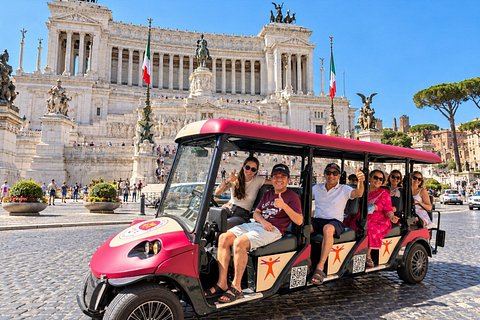 Rome: Golf Cart Panoramic City Tour
Free cancellation
(opens in a new tab)
-
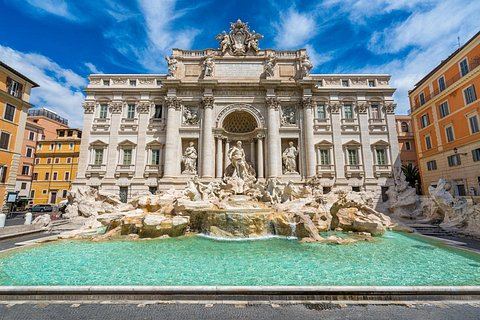 Rome: Pantheon, Trevi Fountain and Roman Squares Guided Tour
Free cancellation
(opens in a new tab)
-
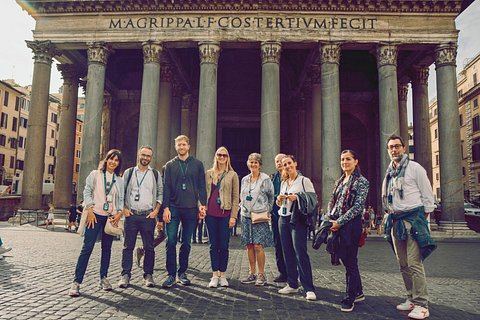 Rome Walking Tour Through the Ages with Guided Pantheon Visit
Free cancellation
(opens in a new tab)
Affiliate link Viator · If you book through this link, we may earn a commission at no extra cost to you.