
Written by  Maria Torres · Updated 2026-11-20
- Category
- Churches & Basilicas
This compact Carmelite church on Via XX Settembre, about two blocks from Piazza della Repubblica, holds one of the best-known sculptures of the Baroque. It was built from 1608 to 1620 and is the only building designed and completed entirely by Carlo Maderno, with a façade added by Giovanni Battista Soria in 1624–1626; it was rededicated to the Virgin after the Catholic victory at White Mountain in 1620. The reason to come is the Cornaro Chapel, designed by Gian Lorenzo Bernini and completed in 1652, where the white marble Ecstasy of St. Teresa shows the saint swooning beneath an angel with a spear. On the side walls, members of the Cornaro family watch from what look like theater boxes. A visit takes 15 to 20 minutes.
Quick facts
- Address
- Via XX Settembre 17, Sallustiano, 00187
- Metro / train
- Metro A A · Repubblica
- Metro / train
- Metro A A · Barberini
- Completed
- 1620
- Architect
- Carlo Maderno
Sources · facts checked on 2026-11-16
The Cornaro Chapel and the Ecstasy of St. Teresa
The reason to come is the Cornaro Chapel in the left transept, which Gian Lorenzo Bernini designed as a single ensemble of architecture, sculpture and painting for the Venetian cardinal Federico Cornaro, who wanted a burial chapel. Bernini made the terracotta model in 1644–1647 and completed the chapel in 1652, at a cost of 12,000 scudi. He took the commission in the years after the death of Urban VIII, when the new pope, Innocent X, gave him little work.
The white marble group shows the episode St. Teresa of Ávila describes in her autobiography: an angel holding a long golden spear pierces her heart, leaving her consumed by the love of God. Teresa sinks back on a cloud with eyelids half closed and mouth open, while the smiling angel stands over her. Gilded rays fall behind the figures, lit by daylight from a window hidden in the pediment above, and the painted vault of the chapel opens onto clouds with the dove of the Holy Spirit.
On the side walls, life-size marble portraits of male members of the Cornaro family, including the cardinal and the doge Giovanni Cornaro, lean out of what look like theater boxes and talk among themselves as if watching a performance. The chapel was fully restored and reopened in October 2021.
The rest of the church
The church is small, 35 m long and 19 m wide, with a single nave under a barrel vault and three chapels on each side, and its walls are covered with colored marble, gilded stucco and white angels. Giovanni Domenico Cerrini frescoed the vault in 1675 with the Virgin triumphing over heresy and the fall of the rebel angels, and painted the Assumption in the dome. The apse fresco by Luigi Serra (1885) shows the Catholic army entering Prague.
Domenichino painted an altarpiece of 1630, and Guercino and Nicolas Lorrain also have works here. Domenico Guidi's marble Dream of Joseph is flanked by reliefs by Pierre-Étienne Monnot, and the organ loft over the entrance was decorated by Mattia de Rossi in 1680.
History: Maderno, Borghese and the Battle of White Mountain
The Discalced Carmelites bought the land in 1607 and built a church dedicated to St. Paul in 1608–1620 to a design by Carlo Maderno; it is the only building he both designed and completed entirely. While digging the foundations in 1608, workers found the ancient statue of the Sleeping Hermaphrodite. Cardinal Scipione Borghese took the statue and in exchange paid for the travertine façade, built in 1624–1626 by Giovanni Battista Soria and modeled on Maderno's nearby Santa Susanna.
The church takes its name from the Battle of White Mountain near Prague on November 8, 1620, a Catholic victory in the Thirty Years' War. A Carmelite chaplain with the army, Father Domenico di Gesù e Maria, carried an image of Mary adoring the Child that was credited with the victory, and on May 8, 1622 the image was brought here and the church rededicated to the Virgin. Turkish banners captured at the siege of Vienna in 1683 were later hung in the church. A fire in 1833 damaged the interior.
How to get there
The church stands at Via XX Settembre 17, on the corner of Largo di Santa Susanna, across the street from the Moses Fountain (Fontana del Mosè). Repubblica station on Metro A, on Piazza della Repubblica, is about two blocks away. Barberini station, also on Metro A, is a little farther, and the walk passes Santa Susanna.
Opening hours and tips
In November 2026 the Carmelites listed visiting hours as weekdays 8:00–12:00 and 16:00–18:00, and Sundays and holy days 9:00–12:00 and 16:00–18:00; check before you go. Visits are not allowed during services, Mass is at 7:00 Monday to Saturday and 10:30 on Sundays, and guided groups must use earpieces. Note the four-hour midday closure.
A visit takes 15 to 20 minutes. Stand at the center of the transept rather than at the chapel railing to see the ensemble as Bernini framed it, with the light falling from above. The church pairs well with the Baths of Diocletian (Terme di Diocleziano) and Palazzo Massimo alle Terme (National Roman Museum) near Termini, or with Palazzo Barberini (National Gallery of Ancient Art) and the Capuchin Crypt (Cripta dei Cappuccini) down the hill.
Frequently asked questions
Where is Bernini's Ecstasy of St. Teresa?
In the Cornaro Chapel, in the left transept of Santa Maria della Vittoria at Via XX Settembre 17, near Repubblica station on Metro A.
When did Bernini make the Ecstasy of St. Teresa?
The terracotta model dates from 1644–1647 and the chapel was completed in 1652, for Cardinal Federico Cornaro.
What are the opening hours of Santa Maria della Vittoria?
In November 2026 visits were allowed on weekdays 8:00–12:00 and 16:00–18:00 and on Sundays 9:00–12:00 and 16:00–18:00, but not during services. Check before you go.
Is Santa Maria della Vittoria worth visiting?
If you are interested in Bernini or Baroque sculpture, yes: the Cornaro Chapel is one of his most complete works, and the visit takes only 15 to 20 minutes.
Why is the church called Santa Maria della Vittoria?
It was rededicated to the Virgin of Victory after the Catholic victory at the Battle of White Mountain near Prague in 1620.
How do I get to Santa Maria della Vittoria?
Take Metro A to Repubblica; the church is about two blocks northwest of the station, on Via XX Settembre.
Popular tours that include Santa Maria della Vittoria
-
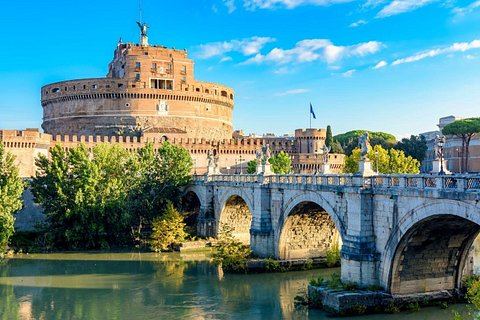 Castel Sant’Angelo Tour with Panoramic Views
Free cancellation
(opens in a new tab)
-
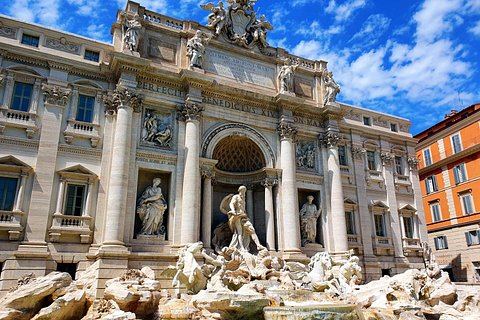 Rome: Fountains and Fallen Angels Small Group Walking Tour
Free cancellation
(opens in a new tab)
-
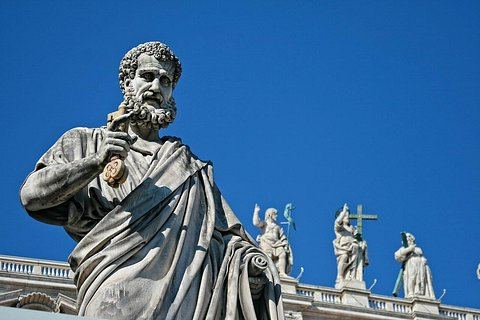 Angels and Demons Tour in Rome
Free cancellation
(opens in a new tab)
Affiliate link Viator · If you book through this link, we may earn a commission at no extra cost to you.