
Written by  Maria Torres · Updated 2026-11-20
- Category
- Museums & Galleries
Baldassare Peruzzi designed this villa, begun in 1506 for Agostino Chigi, the Sienese banker and treasurer of Pope Julius II; Chigi moved in in 1511. Its frescoes remain in place: Raphael's Triumph of Galatea and the Loggia of Cupid and Psyche painted by Raphael and his workshop, where Giovanni da Udine's garlands of more than 170 plants include some of the earliest European images of maize and squash. Upstairs, Peruzzi's Hall of Perspectives opens painted views onto the city, and the bedroom has Sodoma's Wedding of Alexander and Roxana. A ceiling in the Galatea loggia records Chigi's horoscope, set for his birth in 1466. The villa stands on Via della Lungara, at the edge of Trastevere.
Quick facts
- Address
- Via della Lungara 230, Trastevere, 00165
- Metro / train
- Metro A A · Lepanto
- Metro / train
- ATAC tram 8 · Belli
- Opening hours
- Mon–Sat: 09:00–14:00
- Admission
- Paid (ticketed)
- Architect
- Baldassarre Peruzzi
Sources · facts checked on 2026-11-16
What it is
Villa Farnesina is the Renaissance suburban villa of Agostino Chigi, the Sienese banker and treasurer of Pope Julius II, built on Via della Lungara on the Trastevere side of the Tiber. Its interest lies in its painted rooms, which are still where they were made: frescoes by Raphael and his workshop, Sebastiano del Piombo, Baldassarre Peruzzi and Sodoma, all commissioned by one patron within about fifteen years. The villa now belongs to the Accademia Nazionale dei Lincei, Italy's national academy of sciences, and the first floor also houses the national print collection (Gabinetto nazionale delle stampe).
Ground floor: the Galatea and Cupid and Psyche loggias
The Loggia of Cupid and Psyche was the villa's entrance hall, originally open toward an Italian garden in front of the facade; today its five arches are closed with glass. Its vault was painted in 1518 by Raphael's workshop to his designs, with Giovan Francesco Penni, Giulio Romano and Giovanni da Udine among the painters. The story, from Apuleius, runs around the spandrels and ends in the two large scenes painted as if they were tapestries stretched across the ceiling: the Banquet of the Gods, in which Psyche is received on Olympus, and the Wedding of Cupid and Psyche. Giovanni da Udine framed everything with festoons of fruit, flowers and vegetables, more than 170 plant species, including maize and squash, among the earliest European images of plants from the Americas.
Next door, the Loggia of Galatea holds Raphael's Triumph of Galatea, around 1512: the sea nymph rides a shell chariot drawn by dolphins, surrounded by tritons, nereids and cupids. Beside it is Sebastiano del Piombo's Polyphemus, the giant who loved her. Sebastiano also painted the nine lunettes with scenes from Ovid's Metamorphoses in the winter of 1511–1512, and a giant head of a young man. On the vault, Peruzzi painted Agostino Chigi's horoscope in 1511, with the constellations arranged to show the sky at the time of the patron's birth in 1466.
Upstairs: the Hall of Perspectives and Sodoma's bedroom
On the first floor, Peruzzi's Hall of Perspectives (Sala delle Prospettive), painted in 1519, is a salon surrounded by painted columns and balconies that open onto imaginary views of countryside, hill towns and a city in which you can pick out the church of Santo Spirito and Porta Settimiana. Chigi held his wedding banquet here on August 28, 1519. During restoration a satirical inscription in German Gothic letters was found between the painted columns, left by the Landsknechts, the German mercenaries of the Sack of Rome, joking that they had made the pope run.
The adjoining room was Chigi's bedroom. In 1519 Giovanni Antonio Bazzi, known as Sodoma, painted it with the Wedding of Alexander the Great and Roxana, based on an ancient painting described by Lucian, with Alexander offering his crown to his bride on the north wall. Other scenes show Alexander's clemency to the family of the defeated King Darius and Alexander taming the horse Bucephalus.
History: from Chigi to the Farnese and the Lincei
Chigi commissioned Baldassarre Peruzzi to design the villa in May 1505, the first stone was laid on April 22, 1506, and in 1511 Chigi moved in and showed the house to the pope. He lived there until his death in 1520, after which the villa declined and lost its furnishings. In 1579 it passed to the Farnese family, in breach of the inheritance conditions Chigi had set, and it has carried their name, in the diminutive Farnesina, ever since.
In 1693 Ranuccio II Farnese had the frescoes restored by Carlo Maratti. In the 18th century the villa passed, with the Farnese inheritance, to the Bourbon kings of Naples, and in the 1880s the building of the Tiber embankments destroyed part of the garden and a loggia on the river. The Italian State acquired the villa in 1927, and from 1944 it has been assigned to the Accademia Nazionale dei Lincei.
Hours, tickets and guided tours
When this page was checked (November 2026), the official site listed opening hours on weekdays (Monday to Saturday, not public holidays) from 9:00 to 14:00, with last entry at 13:15, plus a special opening on the second Sunday of each month from 9:00 to 17:00. Tickets valid from November 13, 2026 to February 14, 2027 cost €12 for adults aged 18 to 65, €10 for over-65s and some card holders, €7 for students aged 10 to 18, and nothing for children under 10 with their parents. A guided visit of the villa and gardens cost €16; tours in English ran on Saturdays at 10:00 and had to be booked. The villa recommends buying tickets online. Check the official site before you go.
How to get there and what to combine
The entrance is at Via della Lungara 230. From Roma Termini the villa suggests bus H to the Piazza Belli stop, just after Ponte Garibaldi, then a walk along the river to Piazza Trilussa and under the arch of Porta Settimiana onto Via della Lungara. Alternatively, take Metro A to Lepanto and bus 280 to the Lungotevere della Farnesina stop; from there, Salita del Buon Pastore leads up to Via della Lungara. Tram 8 also reaches Piazza Belli from Trastevere station.
Because the villa closes at 14:00, plan it for the morning. Allow about an hour, more if you take a guided tour. The Galleria Corsini, the second site of the national gallery shared with Palazzo Barberini (National Gallery of Ancient Art), is also on Via della Lungara, at number 10, and one ticket covers both galleries. From Porta Settimiana, Trastevere and Santa Maria in Trastevere are a short walk away.
Rooms and frescoes at Villa Farnesina
The main painted rooms on the visit route.
Loggia of Cupid and Psyche
Artist and date Raphael's workshop, 1518; festoons by Giovanni da Udine
Banquet of the Gods and Wedding of Cupid and Psyche; 170+ plant species including maize and squash
Loggia of Galatea
Artist and date Raphael (about 1512), Sebastiano del Piombo (1511–1512), Peruzzi (1511)
Triumph of Galatea, Polyphemus, Ovid lunettes, Chigi's horoscope vault
Sala del Fregio
Artist and date Baldassarre Peruzzi, about 1511
Frieze room, probably Chigi's study
Hall of Perspectives
Artist and date Baldassarre Peruzzi, 1519
Illusionistic colonnade with views of the countryside and the city; Landsknecht graffiti
Wedding Chamber (Chigi's bedroom)
Artist and date Sodoma, 1519
Wedding of Alexander and Roxana, family of Darius, Bucephalus
The visit also includes the Saletta Pompeiana, the Galleria delle Grottesche and the gardens.
Frequently asked questions
Is Villa Farnesina worth visiting?
Yes, for anyone interested in Raphael: his Triumph of Galatea and the Cupid and Psyche loggia are still in the rooms they were painted for, alongside work by Peruzzi, Sebastiano del Piombo and Sodoma.
What are Villa Farnesina's opening hours?
In November 2026 the official site listed weekdays (Monday to Saturday) from 9:00 to 14:00, last entry 13:15, and the second Sunday of the month from 9:00 to 17:00. Check the official site before you go.
How much does Villa Farnesina cost?
From November 13, 2026 to February 14, 2027 a standard adult ticket costs €12, with reductions to €10 and €7, and free entry for children under 10. A guided visit costs €16.
How do I get to Villa Farnesina?
From Termini, take bus H to Piazza Belli and walk along the river and through Porta Settimiana to Via della Lungara 230, or take Metro A to Lepanto and bus 280 to Lungotevere della Farnesina.
How long do you need at Villa Farnesina?
About an hour is enough for the two loggias and the first-floor rooms.
Why is it called Villa Farnesina?
It was built for Agostino Chigi but passed to the Farnese family in 1579, and it has carried their name, in the diminutive form, ever since.
Popular tours that include Villa Farnesina
-
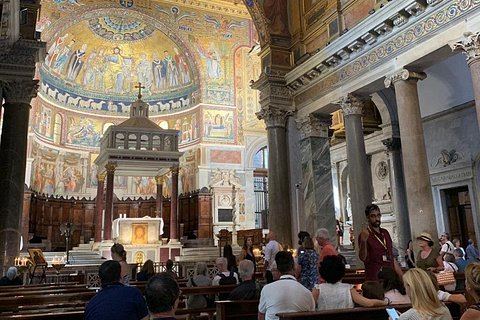 Private Tour - Trastevere and Villa Farnesina
Free cancellationPrivate
(opens in a new tab)
-
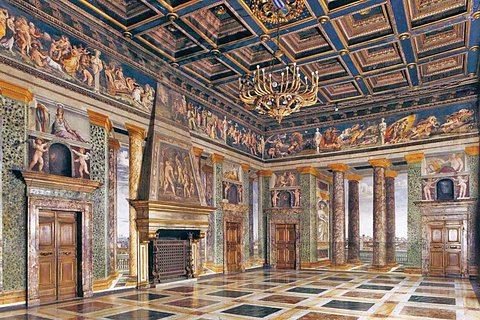 Skip-the-line Villa Farnesina and Raphael's Paintings private tour led by a local guide
Free cancellationPrivate
(opens in a new tab)
-
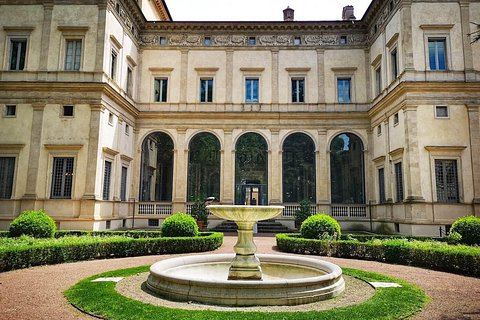 Private Villa Farnesina Experience: The Best of Renaissance Tour
Free cancellationPrivate
(opens in a new tab)
Affiliate link Viator · If you book through this link, we may earn a commission at no extra cost to you.