
Written by  Maria Torres · Updated 2026-11-20
- Category
- Parks, Gardens & Viewpoints
Created by the Lazio Region in 1988, this park covers about 4,580 hectares across Rome, Ciampino and Marino, taking in some 16 kilometers of the Via Appia Antica along with the Caffarella valley and the Parco degli Acquedotti. The road itself was begun in 312 BC by the censor Appius Claudius Caecus as a military route to Capua and later extended to Brindisi. Its first miles beyond the city walls are lined with tombs, including that of Caecilia Metella, and with Christian and Jewish catacombs, and in July 2024 it was inscribed on the UNESCO World Heritage List as "Via Appia. Regina Viarum." On Sundays and public holidays the old road becomes a pedestrian zone, the best time to walk or cycle it.
Quick facts
- Address
- Via Appia Antica 42, Appia Antica, 00179
- Metro / train
- Metro C C · Porta Metronia
- Metro / train
- Metro A A · Colli Albani
- Admission
- Free
Sources · facts checked on 2026-11-16
- Parco Regionale dell'Appia Antica
- Parco Appia Antica: Come arrivare
- Parco Appia Antica: Rete di accoglienza
- Parco regionale dell'Appia antica (Italian Wikipedia)
- Appian Way (English Wikipedia)
- Ministero della Cultura: Mausoleo di Cecilia Metella e Chiesa di San Nicola
- Tomb of Caecilia Metella (English Wikipedia)
What the park covers
The Appian Way Regional Park (Parco Regionale dell'Appia Antica) was created by the Lazio Region in 1988 and covers about 4,580 hectares in the municipalities of Rome, Ciampino and Marino, which makes it the largest protected urban area in Europe. Its spine is more than 16 kilometers of the Via Appia Antica, running south from the Aurelian Walls, but it also takes in the Caffarella valley (about 200 hectares), the Parco degli Acquedotti (about 240 hectares), the Tor Marancia estate (about 220 hectares) and the Tenuta della Farnesiana (about 180 hectares).
Most of the land is not public: about 95 percent is privately owned, by old aristocratic estates, companies, small owners and religious bodies. That explains the walls along much of the road, and why the countryside between the monuments still has farms and private houses. The park's regional authority has its headquarters at Via Appia Antica 42. The individual archaeological sites along the road, such as the Tomb of Caecilia Metella and the Villa of the Quintilii, are run separately by the Ministry of Culture's Parco Archeologico dell'Appia Antica.
The Regina Viarum
The censor Appius Claudius Caecus began the road in 312 BC as a military route to Capua, about 195 kilometers south, and it was later extended to the port of Brindisi. After the slave revolt led by Spartacus, some 6,000 captured rebels were crucified along the road between Rome and Capua in 71 BC. A parallel road, the Via Appia Nuova, was built in 1784, and Pope Pius VI had the old road restored after it had fallen out of use.
The idea of turning the Appia into a park dates back to the Napoleonic period. From the late 1950s the journalist Antonio Cederna and the association Italia Nostra campaigned to stop building along it, and Cederna became president of the park in 1993, five years after the Region created it. The park was enlarged in 2002 when Tor Marancia was finally acquired, and again in 2018. In July 2024 the Via Appia was inscribed on the UNESCO World Heritage List as "Via Appia. Regina Viarum."
What you see along the first miles
The road leaves the city at Porta San Sebastiano. In the second mile is the small church of Domine Quo Vadis, and beyond it the great Christian cemeteries open to visitors: the Catacombs of San Callisto (Catacombe di San Callisto), the Catacombs of San Sebastiano (Catacombe di San Sebastiano) and, close by, the Catacombs of Domitilla (Catacombe di Domitilla). Then come the ruins of the Circus of Maxentius.
At the third mile stands the Tomb of Caecilia Metella, built between about 30 and 10 BC for the daughter of Quintus Caecilius Metellus Creticus, consul in 69 BC. The drum is about 29.5 meters across, and its frieze of ox skulls gave the area its name, Capo di Bove. In 1302 to 1303 the Caetani family turned the tomb into the keep of a fortified castle, which also enclosed the church of San Nicola; the castle rooms now display statues, sarcophagi and inscriptions found along the road. The Villa of the Quintilii lies at the fifth mile.
Car-free Sundays, bikes and info points
On Sundays and public holidays motor vehicles, except authorized ones, may not drive on the Appia Antica from Porta San Sebastiano to the end of the route, from 9:00 to 16:00 in winter and 9:00 to 18:00 in summer time. From the Tomb of Caecilia Metella southward there is a permanent limited traffic zone every day, open only to residents' vehicles. On other days cars use the road as far as Caecilia Metella, so Sundays and holidays are the best time to walk or cycle the first stretch.
The park lists several staffed points. The Centro Servizi Appia Antica at Via Appia Antica 58/60 rents city bikes, mountain bikes and e-bikes and gives information. The Casa del Parco in the Caffarella valley, at the Largo Pietro Tacchi Venturi entrance, also rents bikes.
How to get there
For the start of the road at Porta San Sebastiano, ATAC buses 118 and 218 stop at Via di Porta San Sebastiano, and Metro C has a station at Porta Metronia. Bus 660 runs to Via Appia Antica at Via di Cecilia Metella, by the tomb. For the Caffarella valley, take Metro A to Colli Albani-Parco Appia Antica and walk to the Largo Tacchi Venturi entrance. For the aqueducts, Metro A stops at Giulio Agricola and Subaugusta.
There is no parking at Porta San Sebastiano. On car-free Sundays the park suggests leaving a car around Largo Galvaligi and walking through Parco Scott to reach the Appia at the Quo Vadis church.
Tickets and opening hours for the sites
The road and the open countryside are free and always accessible. The Tomb of Caecilia Metella, with the Capo di Bove complex, is ticketed: in November 2026 the Ministry listed it as open Tuesday to Sunday from 9:00 to 16:30, ticket office until 16:00, closed on Mondays. A combined park ticket covers all the state sites, including the Villa of the Quintilii. The catacombs have their own tickets and schedules. Check the official sites before you go.
Tips for planning the day
A realistic walk runs from Porta San Sebastiano to the Tomb of Caecilia Metella, with a catacomb visit on the way, and returns by bus 118 or 660. With a bike you can continue south on the paved road toward the Villa of the Quintilii. Carry water; on the open stretches beyond Caecilia Metella there is little shade. The Baths of Caracalla (Terme di Caracalla) lie just inside the walls on the way out from the center, and the Parco degli Acquedotti, part of the same park, makes a second day.
Sights along the Via Appia Antica
The main stops on the first miles of the road, from the city walls south.
Porta San Sebastiano
Where Start of the road at the Aurelian Walls
City gate where the Appia Antica leaves Rome
Domine Quo Vadis
Where Second mile
Small church on the road out of the city
Catacombs of San Callisto
Where Via Appia Antica
Christian underground cemetery open to visitors
Catacombs of San Sebastiano
Where Via Appia Antica
Christian catacomb at the basilica of San Sebastiano
Circus of Maxentius
Where Between San Sebastiano and Caecilia Metella
Ruins of the circus of the emperor Maxentius
Tomb of Caecilia Metella
Where Via Appia Antica 161, third mile
Late 1st-century BC drum tomb later built into a Caetani castle
Villa of the Quintilii
Where Fifth mile; main entrance on Via Appia Nuova 1092
Large Roman villa run by the Parco Archeologico dell'Appia Antica
The catacombs and the state archaeological sites have separate tickets and opening days; check each official site before you go.
Frequently asked questions
How do I get to the Appian Way from central Rome?
Take ATAC bus 118 or 218 to Porta San Sebastiano, where the old road starts, or bus 660 to the Tomb of Caecilia Metella; Metro C's Porta Metronia station is also nearby.
Is the Appian Way closed to cars on Sundays?
Yes. On Sundays and public holidays motor traffic is banned from Porta San Sebastiano to the end of the route from 9:00 to 16:00 in winter and to 18:00 in summer time.
Can you rent a bike on the Appia Antica?
Yes. The Centro Servizi Appia Antica at Via Appia Antica 58/60 and the Casa del Parco in the Caffarella valley both rent bikes.
Is the Appian Way free to visit?
The road and park land are free. The Tomb of Caecilia Metella, the Villa of the Quintilii and the catacombs charge admission.
How long is the Appian Way inside the park?
More than 16 kilometers of the Via Appia Antica lie inside the regional park, which covers about 4,580 hectares in all.
Is the Appian Way a UNESCO site?
Yes. It was inscribed on the World Heritage List in July 2024 as "Via Appia. Regina Viarum."
Popular tours that include Appian Way Regional Park (Parco dell'Appia Antica)
-
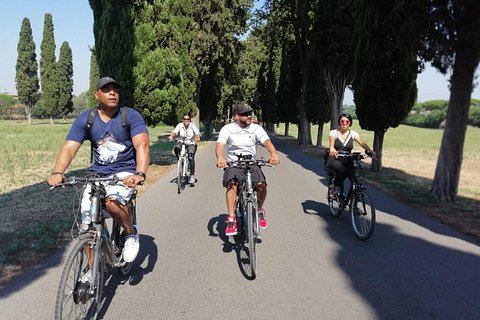 Bike Rental inside Appian Way Regional Park
Free cancellation
(opens in a new tab)
-
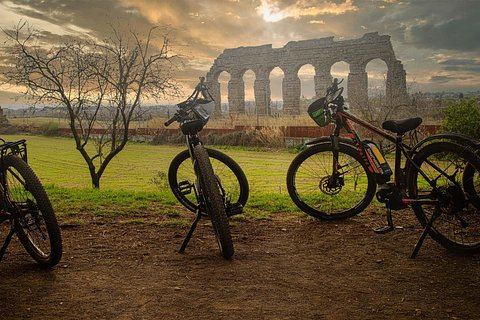 Deluxe Appian Way Bike Tour with Catacombs and Traditional Lunch
Free cancellation
(opens in a new tab)
-
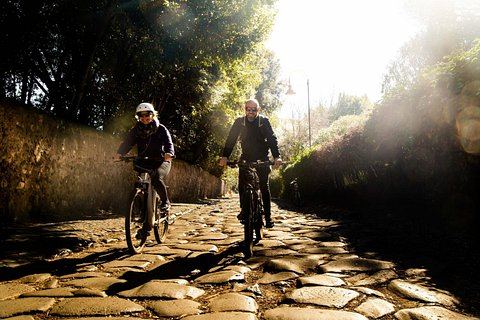 Appian Way Bike tour Underground with Catacombs & Lunch
Free cancellation
(opens in a new tab)
Affiliate link Viator · If you book through this link, we may earn a commission at no extra cost to you.