
Written by  Maria Torres · Updated 2026-11-20
- Category
- Day Trips from Rome
- Area
- Outside Rome
The Banditaccia necropolis outside Cerveteri, about 42 km from Rome, was the cemetery of the Etruscan city of Caere: hundreds of tumuli and cube tombs from the 9th to the 2nd century BC over about 20 hectares, with about 10 hectares open to visitors. Many lie inside round tuff tumuli, their interiors carved to reproduce a house, with a corridor, central hall and side rooms. The Tomb of the Reliefs, of the Matuna family, has painted reliefs of household objects. UNESCO inscribed the site in 2004 with Tarquinia. FL5 regional trains from Rome stop at Ladispoli-Cerveteri station, in neighboring Ladispoli, so plan onward transport; in town, the Museo Nazionale Cerite displays finds from the tombs.
Quick facts
- Address
- Via della Necropoli, Cerveteri, 00052
- Admission
- Paid (ticketed)
- Distance from Rome
- about 43 km by road
Sources · facts checked on 2026-11-16
What the Banditaccia necropolis is
The Banditaccia is the largest cemetery of Caere, one of the main Etruscan cities, on a tuff hill just northwest of modern Cerveteri. It is laid out like a town of the dead: a burial road more than 2 km long runs between hundreds of circular tumuli and rows of cube-shaped tombs, with side streets and small squares. Tombs here span roughly the 9th to the 2nd century BC, from the Villanovan period to the Hellenistic age. About 10 hectares are open to visitors, and the site is run by the Parco Archeologico di Cerveteri e Tarquinia (PACT), part of Italy's Ministry of Culture.
In 2004 UNESCO inscribed the Etruscan Necropolises of Cerveteri and Tarquinia as a single World Heritage Site. Tarquinia is known for painted tombs; Cerveteri is the place to see how Etruscan tomb architecture copied the houses of the living.
What you see: tumuli, cube tombs and the Tomb of the Reliefs
The oldest burials, from the 9th and 8th centuries BC, are pits holding cremation urns or trenches for inhumations. From the 7th century BC, inhumation took over and aristocratic families built great tumuli: drums of tuff topped by earth and grass, each covering one or more chambers cut into the rock. Inside you walk down a corridor (dromos) into rooms carved to imitate a house, with beams, doorways, columns and funeral beds shaped from the living rock.
Tumulo II holds four tombs, among them the Tomb of the Hut (Tomba della Capanna, 7th century BC), built to imitate a hut, the Tomb of the Greek Vases and the Tomb of the Funeral Beds. The Tomb of the Shields and Chairs (late 7th to early 6th century BC) has armchairs and shields carved from the tuff, the Tomb of the Capitals (6th century BC) has two Ionic-style capitals, and the Tomb of the Five Chairs has five seats cut in a side chamber. Two of the great mounds, Tumulo Mengarelli and Tumulo Maroi, are named after their excavators.
From the 6th century BC smaller cube tombs (tombe a dado) were lined up along the burial roads; two of these, Via dei Monti Ceriti and Via dei Monti della Tolfa, can be walked today. In the 4th century BC single-room underground tombs with benches along the walls became common.
The Tomb of the Reliefs (Tomba dei Rilievi), from the 4th century BC, belonged to the Matuna family and is the only Etruscan tomb decorated with painted stucco reliefs: household objects, weapons and tools modeled on the walls and pillars around the burial niches. You view it through glass, and the chamber itself opens only on announced dates.
Excavation history
Marquis Giampietro Campana dug here in 1845–1846; the painted terracotta plaques from his excavations, the Lastre Campana, are now in the Louvre. Organized excavations began under Raniero Mengarelli between 1909 and 1933, who recovered objects and opened the site to visitors; in 1927 he uncovered the main burial road. After 1936 the area was left unguarded and clandestine digging was widespread, and in February 1944 German vehicles damaged the ancient roads. Mario Moretti resumed excavations in 1952–1957 and opened the zone of the great tumuli and the new enclosure.
Because so much was dug up early or illegally, most of the grave goods are elsewhere. The best-known piece from Cerveteri, the terracotta Sarcophagus of the Spouses, is in the National Etruscan Museum (Museo Nazionale Etrusco di Villa Giulia) in Rome, and the gold of the Regolini-Galassi tomb, found in the nearby Sorbo necropolis, is in the Vatican Museums (Musei Vaticani). A smaller selection stays in town at the Museo Archeologico Nazionale Cerite.
Museo Archeologico Nazionale Cerite
The national museum in Cerveteri is on Piazza Santa Maria in the old town and displays finds from the tombs of Caere, including the Euphronios Krater, a Greek painted vase returned to Italy by the Metropolitan Museum of Art. A combined site ticket covers the museum and the necropolis and is valid for 30 days from issue, so you can see both on the same trip.
How to get there from Rome
FL5 regional trains toward Civitavecchia run from Roma Termini and Roma San Pietro to Ladispoli-Cerveteri station, which is in Ladispoli, not Cerveteri; the necropolis is several kilometers inland. From the station, local Cotral buses run to Cerveteri, and on weekends from November 21, 2026 to May 2, 2027 PACT runs the Etruschi in navetta shuttle from Piazzale Roma near the station to the necropolis and the Museo Cerite and back, with departures at 9:45, 11:00 and 13:10 (book online with the site ticket).
By car the drive from central Rome is about 43 km: take the A12 toward Civitavecchia, exit at Cerveteri-Ladispoli and follow the signs to the necropolis, which is on Via della Necropoli.
Opening hours, tickets and tips
The necropolis is closed on Mondays. When checked in November 2026, it opened 9:00–17:00 (last entry 16:00) from October 25, 2026 to March 27, 2027, and 9:00–19:30 (last entry 18:30) in the March–October season; the Museo Cerite opens 9:00–19:30 all year. Entry is free for under-18s and on the first Sunday of the month (Domenica al Museo). Buy tickets on the official online channel linked from pact.cultura.gov.it, and check hours there before you go.
Allow two to three hours for the necropolis and another hour for the museum. The site is open-air with uneven tuff paths and steps down into dark chambers, so wear sturdy shoes and bring water and sun protection in summer.
Tombs to look for at the Banditaccia
Named tombs and features along the visitor route; some chambers open only on set dates.
Tumulo II
Date 7th–6th century BC
Great mound with four tombs, including the Tomb of the Hut and the Tomb of the Greek Vases
Tomb of the Shields and Chairs
Date Late 7th–early 6th century BC
Armchairs and shields carved from the tuff
Tomb of the Capitals
Date 6th century BC
Two Ionic-style capitals and house-like ceiling beams
Via dei Monti Ceriti
Date 6th century BC
Burial street lined with cube tombs
Tomb of the Reliefs
Date 4th century BC
Painted stucco reliefs of household objects, seen through glass
Tumulo Mengarelli
Date 7th century BC
Great mound named after the excavator Raniero Mengarelli
Access to individual tombs can change; the PACT map at the entrance shows what is open.
Frequently asked questions
How do I get to the Cerveteri necropolis from Rome by train?
Take an FL5 regional train to Ladispoli-Cerveteri, then a Cotral bus or, on weekends from November 2026 to May 2027, the PACT shuttle to the necropolis.
What are the opening hours of the Banditaccia necropolis?
It is closed on Mondays. In winter 2026–27 it opens 9:00–17:00 with last entry at 16:00; in the March–October season it opens 9:00–19:30. Check pact.cultura.gov.it before you go.
Is the Cerveteri necropolis worth visiting?
Yes, if you want to walk inside Etruscan tombs: the tumuli have chambers carved to look like houses, and the site is a UNESCO World Heritage Site with Tarquinia.
How long do you need at the Banditaccia?
Two to three hours for the necropolis, plus about an hour if you add the Museo Cerite in town.
Can you go inside the Tomb of the Reliefs?
Normally you view it through glass; the chamber opens only on special dates announced by PACT.
Where are the finds from the Cerveteri tombs?
Many are in Rome's National Etruscan Museum at Villa Giulia, including the Sarcophagus of the Spouses, and some are in the Vatican Museums; a selection is in the Museo Cerite in Cerveteri.
Popular tours that include Cerveteri Etruscan Necropolis (Necropoli della Banditaccia)
-
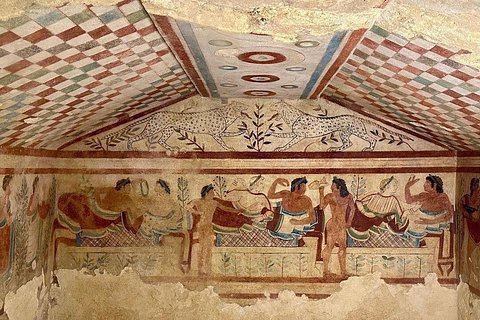 Day trip Rome: Tarquinia and Cerveteri, Etruschi tour
Free cancellationPrivate
(opens in a new tab)
-
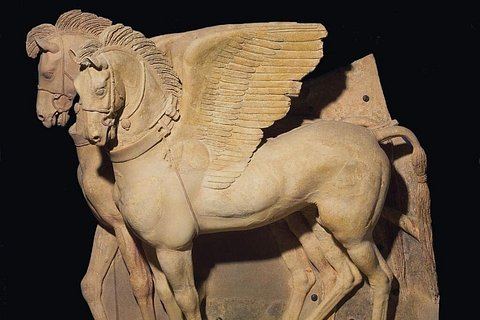 Etruscan Tarquinia and Cerveteri from Rome
Free cancellationPrivate
(opens in a new tab)
-
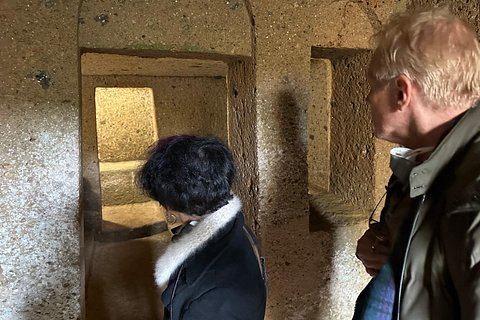 Day tour from Rome to the Etruscan necropolis of Tarquinia and Cerveteri
Free cancellationPrivate
(opens in a new tab)
Affiliate link Viator · If you book through this link, we may earn a commission at no extra cost to you.